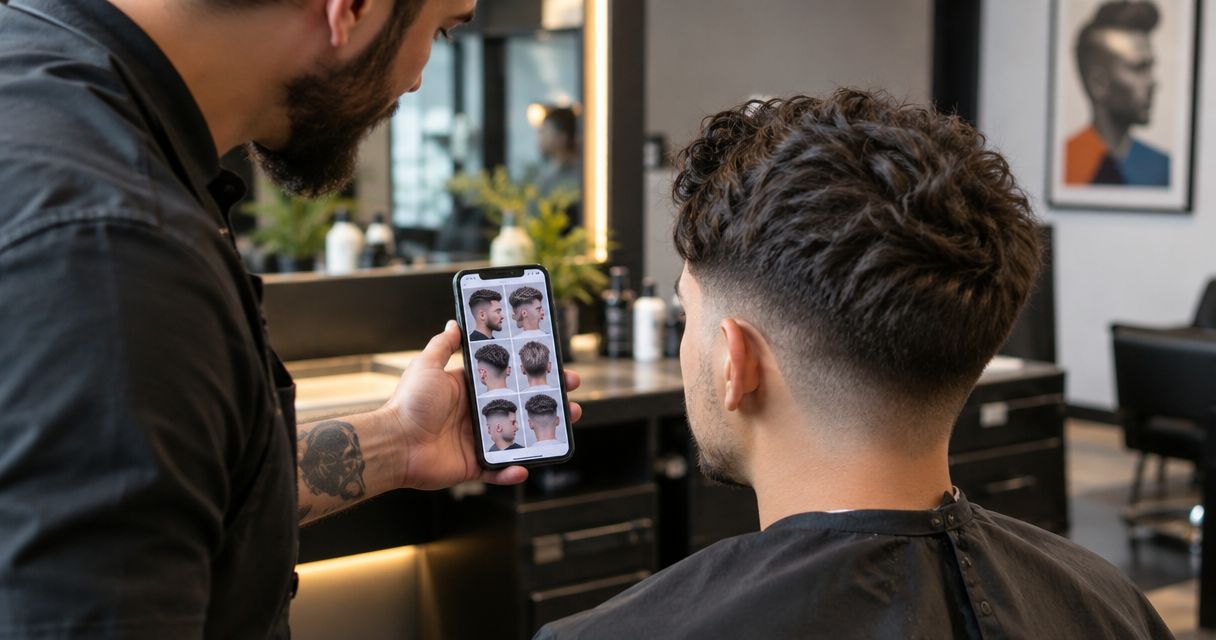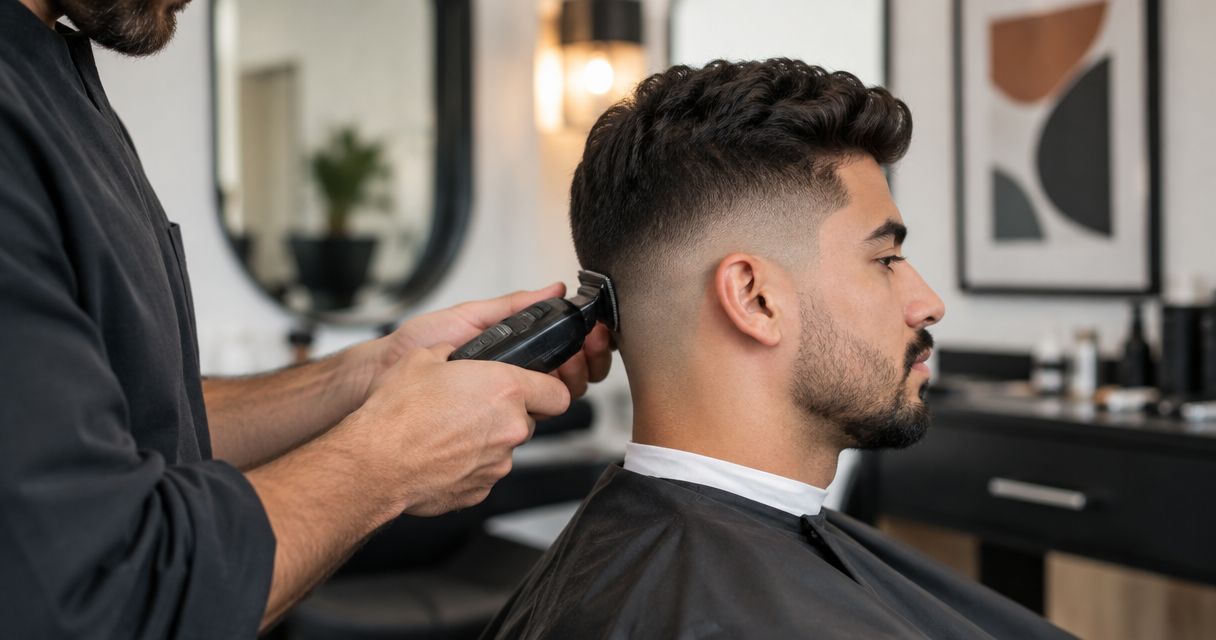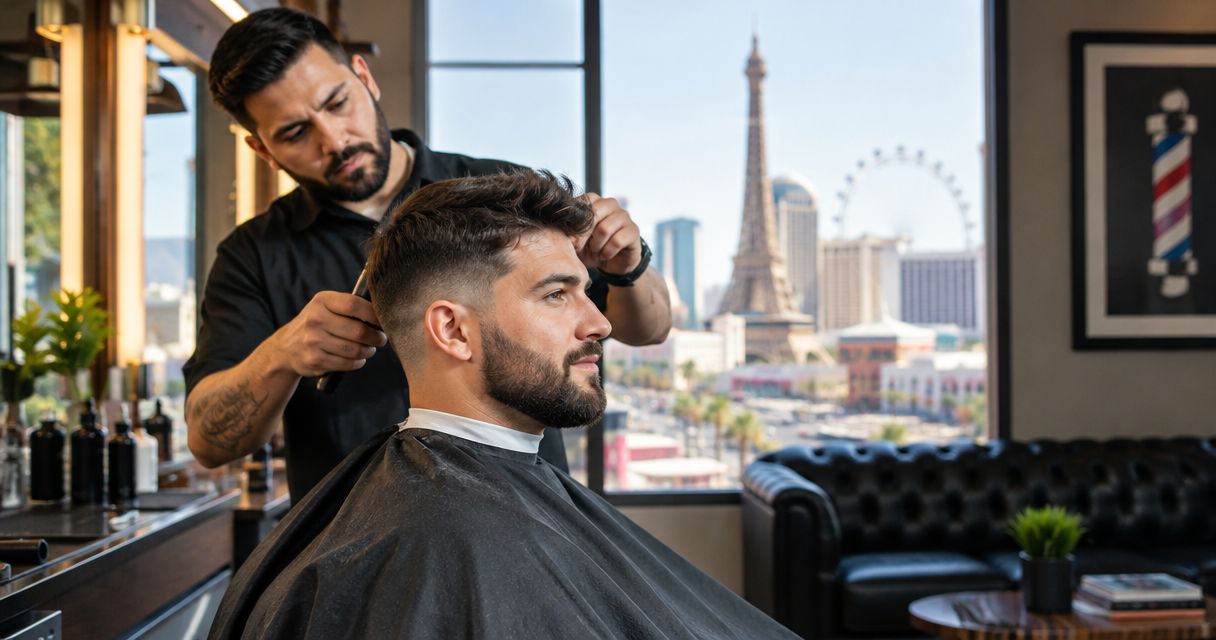
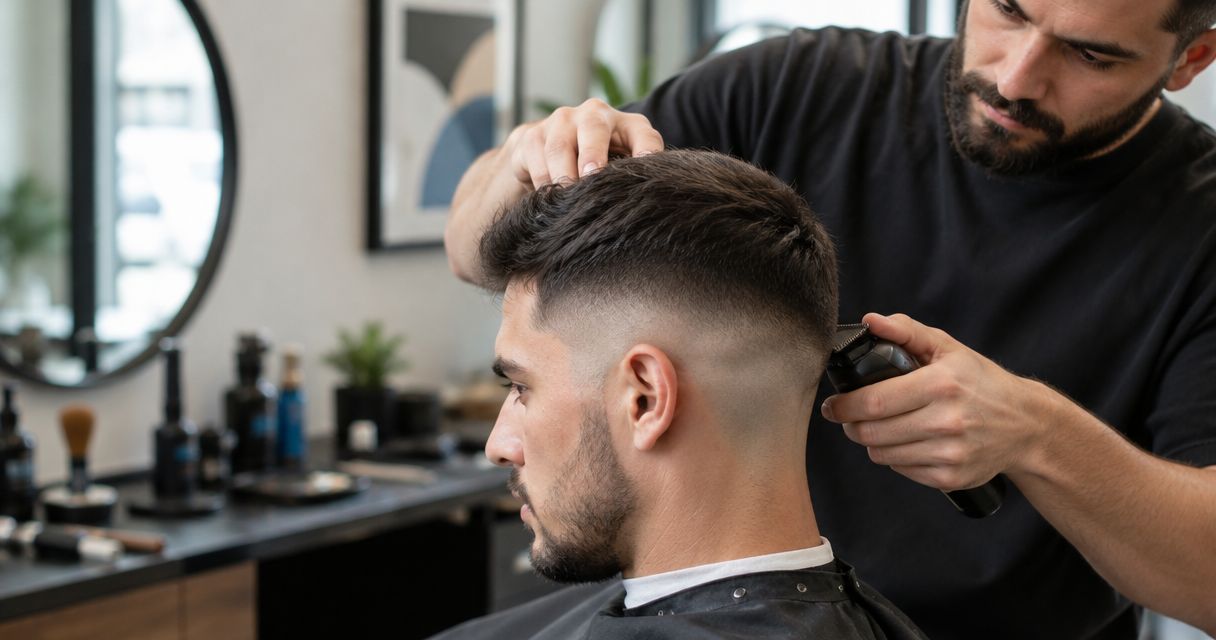
Ask your fade barber for a skin finish if you want the shortest part of your fade taken down to bare skin; choose a shadow finish if you want visible hair left at the bottom. A skin finish creates a stronger bare-to-hair contrast, but close cutting can irritate sensitive skin. Fade height is a separate choice, so asking for skin does not automatically mean asking for a high fade.
- Ask your fade barber for skin when you want bare skin at the bottom, not simply shorter sides.
- Choose a shadow finish when you want visible hair left at the shortest point.
- Decide fade height, shortest finish, and top length separately before cutting begins.
- Ballinfades offers fades and beard trims for Las Vegas locals and visitors seeking men's grooming.
Should you ask your fade barber for a skin finish?
Yes, if bare skin is part of the look you want and close cutting suits your skin. If you only want a neat blend with some coverage, ask for a shadow finish instead. Neither choice determines how much length stays on top.
When explaining the fade you want to your barber, separate the shortest finish from the height of the fade. These are different instructions, and a reference photo should show both.
| Finish | What stays at the bottom | Best for | Main trade-off |
|---|---|---|---|
| Skin finish | Bare skin at the shortest area | A visibly bare base beneath the blend | Close cutting can irritate sensitive skin |
| Shadow finish | A visible layer of short hair | Coverage at the bottom and less bare-skin contrast | Does not produce a fully bare finish |
Use this distinction when choosing a haircut in 2026: skin describes the shortest finish, while low, mid, and high describe where the fade sits. You need both instructions to describe the sides clearly.
Why this matters
A sharp fade depends on the relationship between the bare or short area, the blend, and the longer hair above it. Asking only for a skin fade leaves your barber without your preferred height or top length. That is where an otherwise clear request becomes incomplete.
A clean line-up is another separate detail. It shapes the edges around the hairline; it does not determine whether the bottom of the fade reaches skin. You can ask for defined edges without asking for bare sides.
Whether you live in Las Vegas or are visiting in 2026, decide what you want the haircut to look like outside the chair. Think about your usual styling, whether you wear a beard, and whether exposed skin is actually part of your reference look.
Skin finish: best for a bare base
A skin finish takes the shortest area down to bare skin before blending into longer hair. The visible result is a bare base beneath the fade, rather than a layer of closely cropped hair. The position of that base depends on the fade height you choose.
Choose a skin finish because you want exposed skin, not because the name sounds sharper. A well-shaped haircut does not need bare sides to look clean. The finish should serve your preference rather than replace a clear conversation about shape.
The benefit is clear contrast between skin and hair. The trade-off is close contact with the skin, which deserves attention if shaving or very close cutting has caused redness, bumps, or discomfort before.
Tell your barber about that history before cutting begins. Ask what tool will create the finish, and do not assume that every barber uses the same method. If the skin is already irritated, point it out rather than expecting the barber to spot every sensitive area.
Shadow finish: best for keeping visible coverage
A shadow finish leaves short, visible hair at the bottom of the fade. You still get a transition into longer hair, but the shortest section does not become fully bare. Describe that visible coverage rather than relying on the word shadow alone.
Choose a shadow finish when you want short sides without exposed skin. Its advantage is the remaining layer of hair; its limitation is that it cannot reproduce the bare base shown in a skin-fade reference photo.
Do not assume that leaving hair automatically prevents irritation. Clippers still contact the area, and your skin history still matters. The practical instruction is to leave visible length and explain which close-cutting experiences have bothered you before.
If your previous haircut felt too exposed around the ears or neckline, say exactly that. It gives your barber a useful correction without requiring you to know a clipper setting or a technical term.
Why the right fade finish varies
There is no single finish that fits every haircut. These factors change what you should ask for:
- Skin comfort: Mention irritation from previous shaves or close cuts before choosing a bare finish.
- Desired contrast: Choose whether you want skin clearly visible beneath the blend or short hair covering that area.
- Fade height: Decide how much of the side and back you want taken short, independently of the finish.
- Top shape: Explain what length and shape should remain above the blend so the sides support the whole haircut.
- Beard connection: Decide whether the sideburn should blend into a beard or finish with a more distinct separation.
- Upkeep preference: Ask how the shortest area will look as hair grows back, rather than assuming the fresh-cut appearance stays unchanged.
For a 2026 haircut consultation, these details are more useful than collecting trend names. Your barber needs a description of the result you want, including what should stay—not just what should come off.
How to ask for the finish you actually want
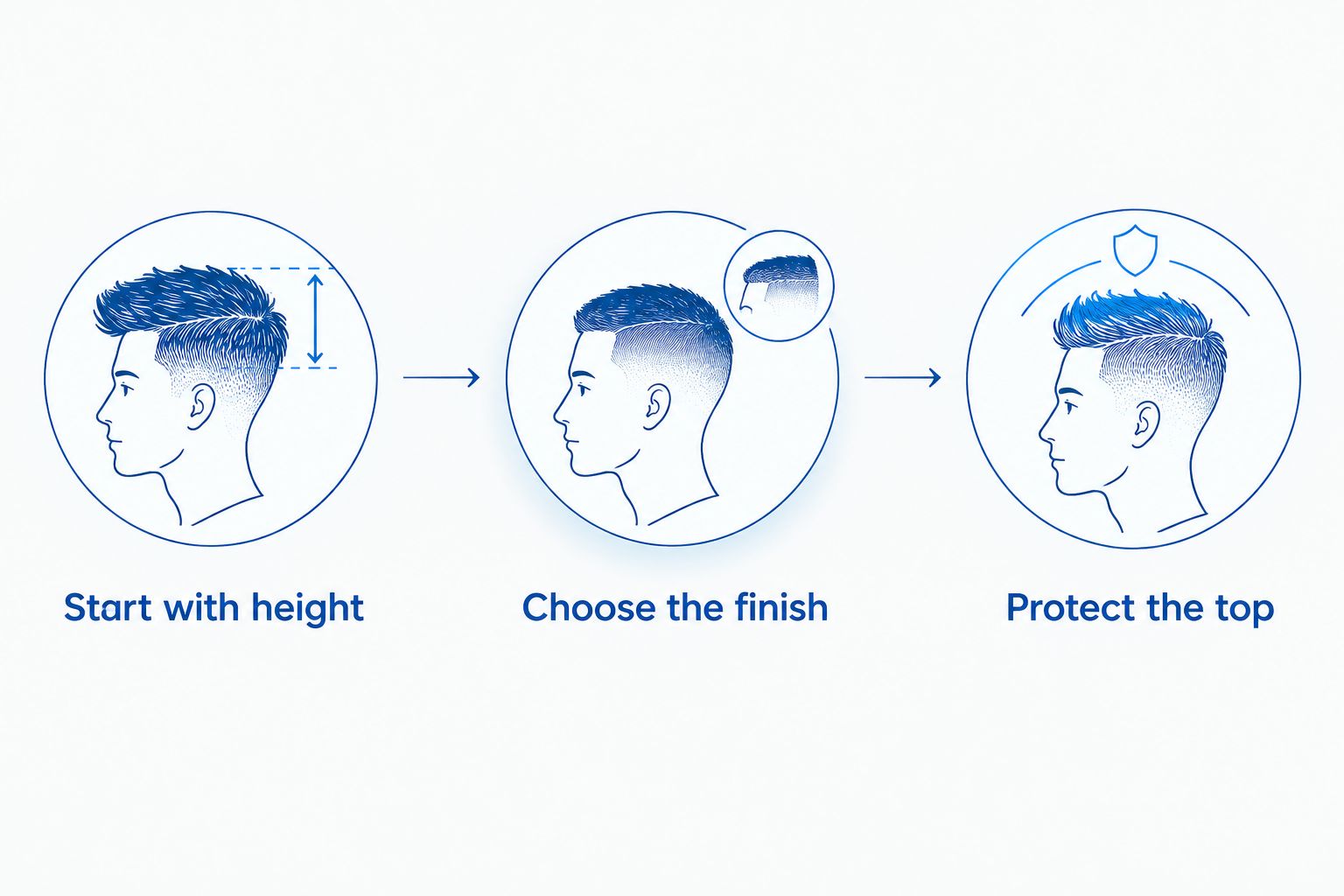
Build your request around 3 choices: fade height, shortest finish, and top length. Handle those before discussing the finishing details. That gives your barber a clear starting point without turning the consultation into a vocabulary test.
Start with height
Show where you want the shortest area to sit around the sides and back. Low, mid, and high are useful starting terms, but a photo makes your intended placement easier to discuss. Check the back as well as the side view.
Avoid describing height only by saying that you want it clean. Clean can mean a tidy neckline, a close finish, a defined edge, or a smooth blend. Name the actual feature you mean.
Choose the finish
Say whether you want bare skin at the bottom or visible short hair left there. Then mention any areas that become uncomfortable with close cutting. This is the point to discuss skin comfort, not after the shortest section is finished.
If you are unsure, ask your barber to explain the visible difference before committing. Your request can be plain: keep some coverage, or take the bottom to skin.
Protect the top
Explain what should remain on top and how you normally wear it. Point out whether you want to preserve the front, keep your current shape, or change the overall length. A reference photo of the sides does not automatically explain the top.
Before cutting starts, have the plan repeated back in ordinary language. You should understand what will be bare, what will stay short, and what length will remain above the blend.
What should you bring to the consultation?
Bring 2 reference photos: a side view and a back view of the result you want. They can show the same haircut from different angles. Make sure the images actually reveal the shortest area rather than hiding it behind lighting, a hat, or the camera angle.
Use 1 reference photo from your own haircut history if it shows something you want to keep or change. Point to the detail instead of asking for an exact copy of someone else's hair. Your own photo is especially useful for explaining where a previous cut felt too high or too bare.
For a 2026 reference search, ignore the date attached to the style and inspect the haircut itself. Look for the height around the ear, the coverage near the neckline, and the shape above the blend. Those details communicate more than a trend label.
Does a skin finish mean a high fade?
A skin finish does not mean a high fade. Skin describes the shortest length, while high describes placement. You can request a lower fade with a skin finish or a higher fade that leaves visible hair at the bottom.
That distinction matters when you like the bare base in a photo but dislike how far it travels up the head. Tell your barber which feature you want to borrow and which feature you want changed.
Can you get a clean line-up without a skin finish?
A clean line-up does not require a skin finish. The line-up defines the hairline edges, while the fade finish determines the shortest area on the sides and back. Ask about both if they matter to your result.
Point out how you want the front, temples, and sideburn edges handled. If you prefer your natural hairline shape, make that part of the conversation rather than assuming a sharper edge means changing its placement.
Should your beard affect the finish you choose?
Your beard affects the sideburn connection, not whether you must choose a skin finish. Ask how the haircut will meet your beard and whether you want that transition blended or more distinct. Keep beard length and beard outline in the discussion, too.
A haircut photo without a beard does not settle that connection for you. If you wear facial hair, show its current shape and explain what should remain before either service begins.
Talk through the cut before the clippers start
Ballinfades is a fit for Las Vegas locals and visitors seeking fades, men's haircuts, and beard trims. When calling about grooming, explain whether you want a skin finish or visible coverage, then ask about discussing height and the beard connection before the cut.
Start with Ballinfades when planning that conversation. The useful request is specific: your preferred finish, the shape you want to keep, and any skin sensitivity your barber needs to know about. A reference photo supports those instructions; it does not replace them.
Plan your next fade
Decide on skin or shadow, then call to discuss your haircut and grooming needs.
FAQ
What should I tell my fade barber if I want a skin finish?
Tell your fade barber that you want bare skin at the shortest point, then specify the fade height and what should remain on top. Mention any irritation from previous close cuts before cutting begins.
Is a skin finish better than a shadow finish?
A skin finish is better for a bare base; a shadow finish is better for keeping visible hair at the bottom. Neither is automatically the better haircut because the choice depends on your preferred coverage and skin comfort.
Can I ask for a low fade with a skin finish?
Yes, you can ask for a low fade with a skin finish. Low describes placement, while skin describes the shortest length, so explain both parts of the request.
Should I get a skin fade if shaving gives me bumps?
Tell your barber about shaving-related bumps before choosing a skin finish. Discuss leaving visible length instead, and seek medical advice for persistent or recurring irritation.
Will a skin finish stay bare as my hair grows?
No, a skin finish does not stay bare as hair grows back. Ask your barber what changes to expect between cuts rather than assuming the fresh-cut finish will remain unchanged.
Does a clean line-up mean I need a skin fade?
No, a clean line-up does not require a skin fade. A line-up shapes the hairline edges; a skin finish removes hair at the shortest part of the fade.
Can I discuss a fade and beard trim with Ballinfades?
Yes, Ballinfades offers fades and beard trims in Las Vegas. Explain how you want the sideburn to connect with your beard and what beard length you want to keep.
One last thing
The word skin tells your barber what disappears, not what stays. Before your 2026 haircut begins, point out the top length, hairline shape, and beard details you want preserved. A clear instruction about keeping something is just as useful as a request to take the sides shorter.