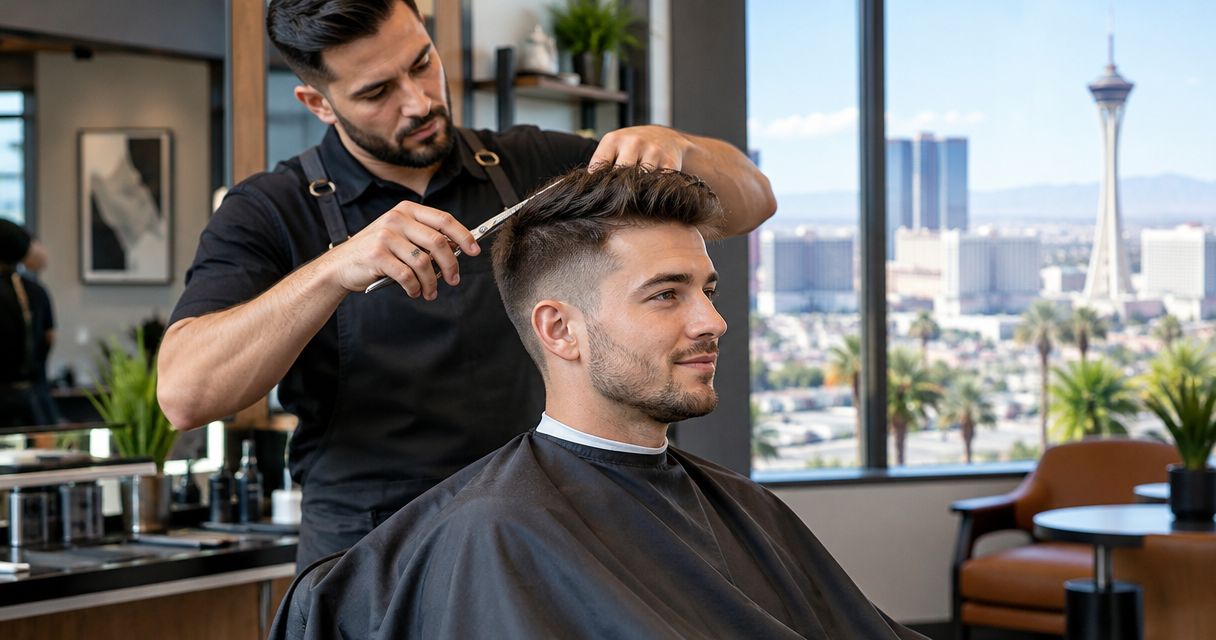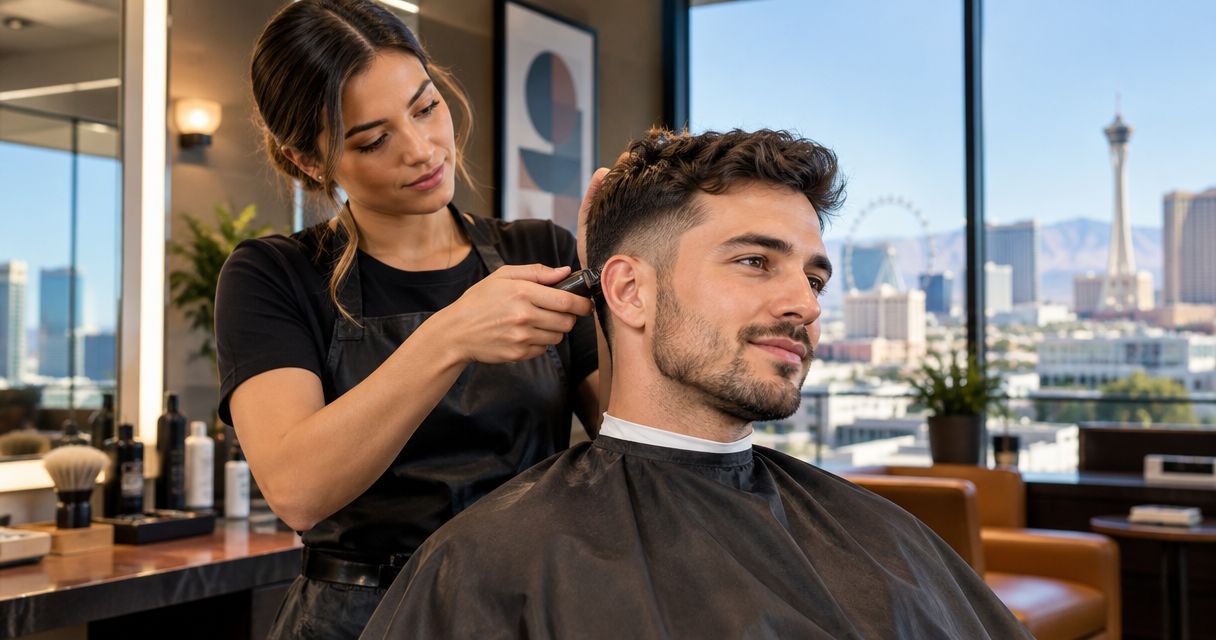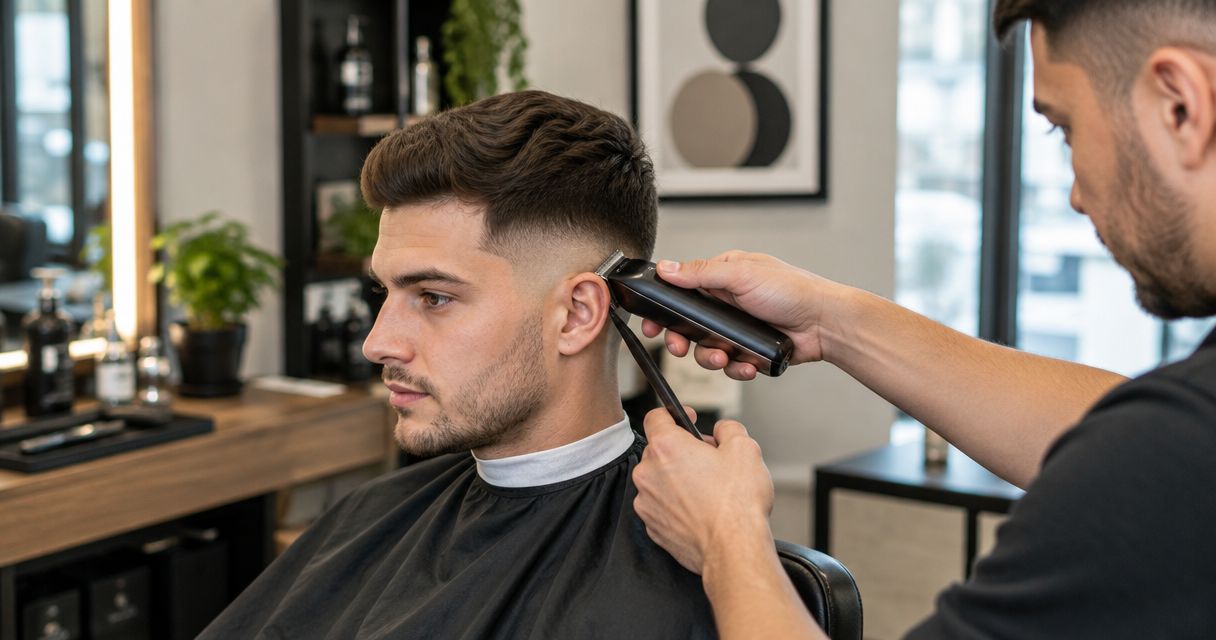
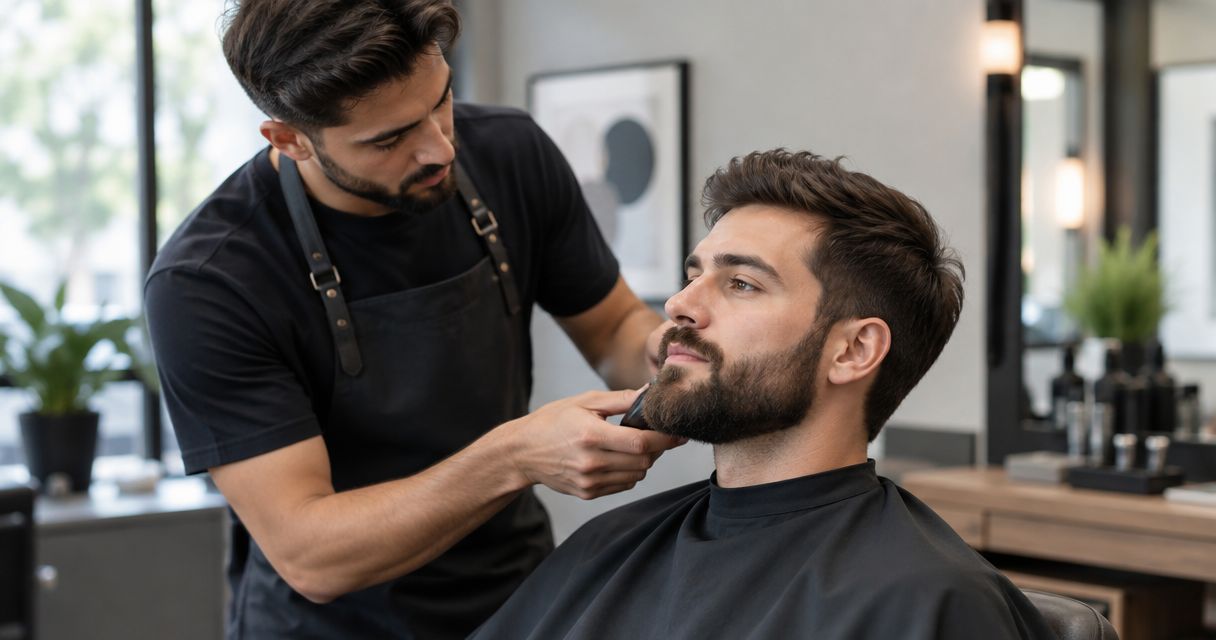
Coordinate your haircut and beard trim by deciding where you want fullness, how the sideburns should connect, and how sharp the edges should look. Treat them as one shape rather than separate services. A close fade does not require a short beard, but the transition and overall balance need to look intentional from the front and side.
- Plan your haircut and beard trim together: choose fullness, sideburn connection, and edge definition before cutting.
- Ballinfades offers men's haircuts and beard trims for Las Vegas locals and visitors seeking coordinated grooming.
- A faded beard connection softens the transition; a defined sideburn keeps a stronger separation.
- Keep useful beard length until you and your barber agree on the finished outline.
Why this matters
Your haircut changes how your beard looks, even when the beard itself stays the same length. Removing bulk around the temples makes facial hair more prominent; leaving fuller sides creates a different frame. That is why a good reference photo should show more than the top of someone's head.
Ballinfades is best suited to Las Vegas locals and visitors seeking men's haircuts and beard trims. You can ask Ballinfades about coordinating those services before describing the details of your cut. Start with the overall result you want, not just a fade name.
For your 2026 grooming plan, prioritize a shape you like both styled and relaxed. A haircut that only works with careful daily styling needs a different conversation from one you want to comb into place and leave alone.
How do you coordinate your haircut and beard trim?
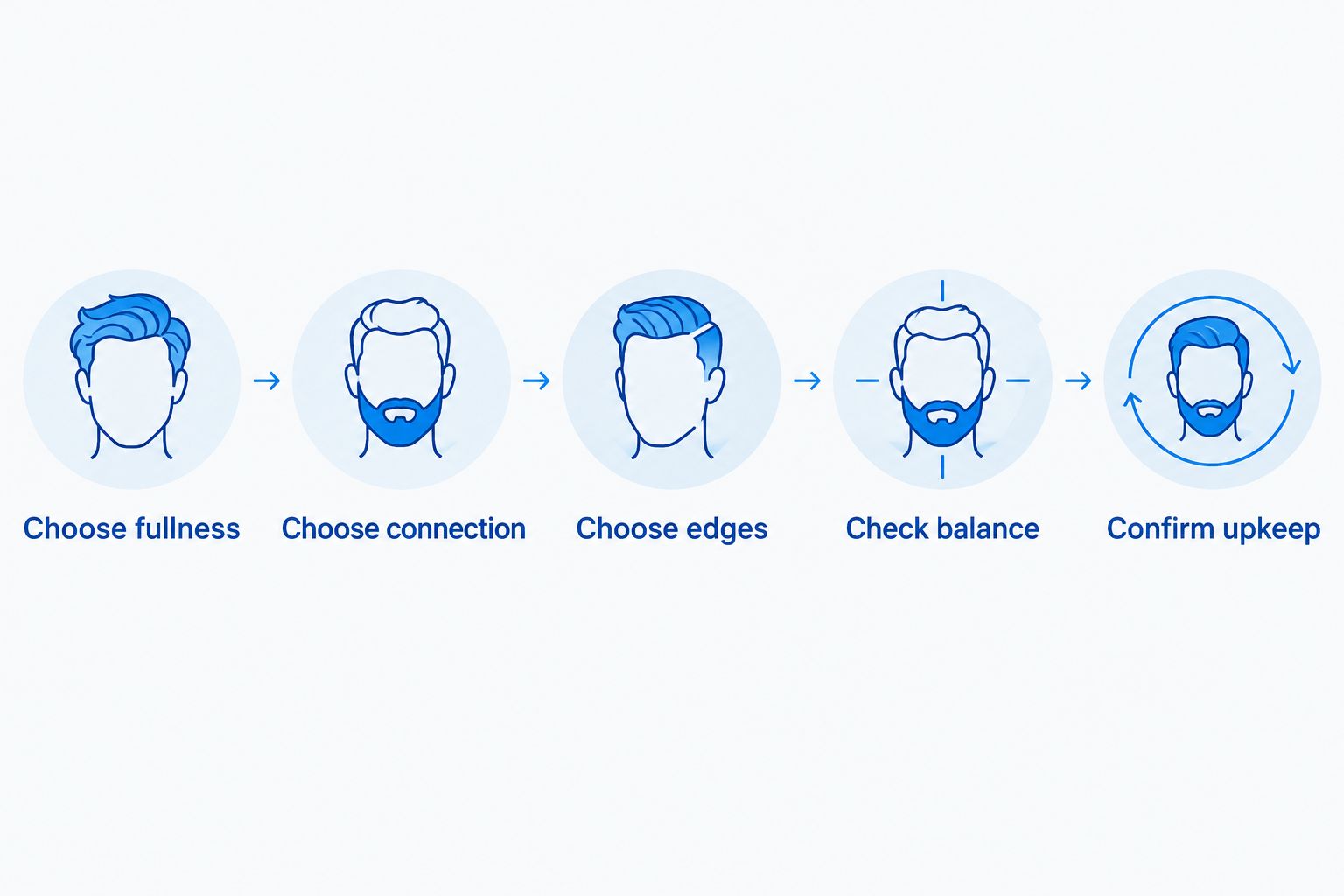
Choose the overall shape first, then agree on the connection and finishing details. Your barber needs to know what to preserve as clearly as what to remove. Use this order before the cutting starts:
- Choose fullness. Decide whether you want the top, the beard, or both to carry the visual weight. Point out areas you want kept fuller, especially the chin and sides of the beard.
- Choose connection. Ask whether the sideburn should fade gradually into the beard or remain more defined. View that choice from the side, where the transition is easiest to judge.
- Choose edges. Discuss the hairline, cheek line, and neckline separately. A crisp outline does not mean every edge needs to be pushed back or raised.
- Check balance. Compare the front and side views before agreeing to remove more length. A beard can look narrow from the front while still projecting strongly at the chin.
- Confirm upkeep. Explain how you style your hair and what beard grooming you will actually do between visits. Let that routine guide the finish.
This order keeps the conversation practical. You do not need to know every barbering term; pointing to the area and explaining the result is useful.
Choose the haircut and beard pairing by your priority
There is no rule that short hair must go with a short beard. The useful question is what you want the combination to emphasize. These pairings give you a starting point, not a fixed prescription.
| Pairing | Best for | What it does | Trade-off to discuss |
|---|---|---|---|
| Close sides with a fuller beard | Keeping the beard as the focal point | Creates a clear contrast between the haircut and facial hair | The sideburn transition needs attention so the contrast looks deliberate |
| Fuller sides with a short beard | Keeping more emphasis on the haircut | Retains width around the head while keeping facial hair understated | Excess bulk near the ears can compete with the beard outline |
| Textured top with a tapered beard | Combining movement above with a shaped lower outline | Separates the texture of the haircut from the beard's silhouette | The top and beard can require different styling routines |
| Short haircut with stubble | Keeping the overall outline simple | Leaves less length to shape on both the head and face | Short length does not hide uneven growth or unclear edges |
Pick the pairing for its shape, not because the reference model has a similar outfit or hair color. Hair texture, growth direction, and beard coverage affect how closely a reference transfers to you.
A faded connection: best for a gradual transition
A faded beard connection gradually changes the length around the sideburn instead of leaving a sudden step between the haircut and beard. It is useful when you want close sides to flow into fuller facial hair without an obvious dividing line.
The benefit is a softer transition. The trade-off is that the short connecting area changes visibly as it grows, so discuss how much ongoing attention you want to give it. Do not request the closest possible finish automatically if you prefer a less exacting routine.
Ask your barber to identify where the blend will begin and where the beard will reach its intended fullness. That prevents a vague request for a beard fade from becoming more length removal than you wanted. Keep the connection decision separate from the decision about chin length.
A faded sideburn does not require tapering the entire beard into a narrow point. You can preserve a fuller lower outline while softening the area next to the ears.
A defined connection: best for a stronger separation
A defined sideburn keeps a more visible boundary between the haircut and facial hair. This suits you when you prefer a distinct beard outline rather than a gradual blend through the connecting area.
The advantage is clarity: the haircut and beard read as separate shapes. The drawback is that an abrupt change can look disconnected when the lengths and outlines have not been considered together. Ask to see the side profile before settling on the boundary.
Be specific about what defined means to you. A clean sideburn edge is different from leaving a heavy block of hair beside the ear, and neither automatically calls for a sharply carved cheek line.
Choose a defined connection because you like the visible separation, not because you assume it needs less upkeep. The edge still grows out, and its appearance depends on your growth pattern and preferred finish.
Why your haircut and beard balance varies
A reference gives direction, but your own hair determines the workable details. These factors explain why copying the same lengths does not always copy the same result:
- Hair texture: Curly, wavy, and straight hair sit differently. Discuss the shape when your hair is worn normally, not only when it is stretched or brushed flat.
- Beard coverage: Removing length from a sparse area does not create more coverage. Identify areas you want to preserve before sharpening the outline.
- Growth direction: Hair that grows outward or changes direction affects how the sides and beard sit. Your normal brushing routine belongs in the consultation.
- Current length: A shape that requires more length cannot be created by trimming alone. Separate the finish you can get now from the outline you want to grow toward.
- Preferred upkeep: A precise line-up and a softer natural edge place different demands on your routine. Choose the finish you want to maintain.
These are better discussion points than treating a face-shape label as a haircut formula. Use the mirror to identify the actual width, length, and outline you want to change.
Bring reference photos that show the whole result
Bring 2 reference photos if one shows the haircut you want and another shows the beard shape. Explain which detail you like in each. Otherwise, your barber has to guess whether you mean the top length, the sideburn connection, or simply the overall impression.
For a 2026 reference collection, save clear views rather than relying on a trend name. A photo with dramatic lighting can hide the cheek line or make beard coverage difficult to judge. Choose images that reveal the areas you want to discuss.
Check 3 views during the consultation: front, side, and back. The front shows width and symmetry, the side shows the connection and chin profile, and the back shows how the haircut finishes at the neckline.
Keep 1 priority clear if the photos conflict. If preserving beard length matters most, say so before asking for a tighter outline. A reference should help explain your preference, not override it.
How do you ask for clean line-ups without losing too much hair?
Ask your barber to follow your existing growth while removing stray hairs and refining the outline. A clean line-up is an edge decision, not permission to move every boundary. Point out any temple, cheek, or beard area where keeping coverage matters more than creating a straighter line.
Discuss the cheek line and neckline separately. You might want a sharper neckline but a softer cheek line, or the reverse. There is no need to give both the same treatment just because you are coordinating the haircut and beard.
Before cutting begins, identify anything you are growing out. A short section beside the mouth or an uneven area near the jaw needs a different approach from an area you want reduced. Clear instructions are more useful than asking for everything to look tighter.
Should you cut your beard shorter when you get a fade?
No. A fade and a fuller beard can work together when the sideburn connection and beard outline are deliberate. Shortening the beard is a separate choice based on the silhouette you want, not a requirement of the haircut.
If you like your current beard length, ask for shaping while preserving that length. Explain whether the main concern is stray hairs, width at the sides, or the lower outline. Those are different requests, and each removes hair from a different place.
For a 2026 haircut refresh, avoid changing every element simply to make the visit feel like a bigger transformation. Keeping a beard shape you already like can make it easier to judge whether the new haircut suits you.
What should you say before a haircut and beard trim?
Start with the result, then name what must stay. Tell the barber how you normally wear your hair, whether you brush or style your beard, and which areas bother you. You can describe preferences plainly without turning the consultation into a list of technical instructions.
At Ballinfades, the haircut and beard trim conversation can start with the services you want and the details you need to discuss. For locals and visitors alike, explain whether you are maintaining an existing shape or changing direction.
Before your 2026 visit, check that your reference still matches your current goal. A saved photo from an earlier stage of growing your beard might show a length you no longer want. Ask about haircut and grooming services, and use the conversation to clarify the shape before committing to the cut.
Plan your haircut and beard trim
Ask about men's haircuts, fades, and beard trims before choosing your finished shape.
FAQ
Should I get my haircut and beard trim together?
Plan your haircut and beard trim together when you want the shapes to complement each other. Discuss the sideburn connection, overall fullness, and edges before either shape is finalized.
Does a skin fade have to connect to a short beard?
A skin fade does not have to connect to a short beard. You can preserve a fuller beard while using a gradual transition or a deliberate separation around the sideburn.
What's the best haircut and beard trim combination for me?
The best combination matches the shape you want, your hair texture, your beard coverage, and your grooming routine. Choose where you want fullness before choosing individual style names.
Can I keep my beard length and still get it shaped?
You can ask for shaping that preserves your beard length. Identify whether you want stray hairs removed, the sides reduced, or the outline refined so the request is clear.
Should my beard cheek line be straight?
Your beard cheek line does not have to be straight. Choose a sharper or more natural outline based on your existing growth and the coverage you want to keep.
How do I explain my haircut and beard trim without knowing barber terms?
Explain what you want fuller, shorter, connected, or more defined. Bring clear reference photos and point to the specific detail you like rather than relying on a style name.
Does Ballinfades offer haircuts and beard trims in Las Vegas?
Ballinfades offers men's haircuts and beard trims in Las Vegas. Ask about coordinating those services and explain the overall shape you want before discussing the finishing details.
One last thing
The most useful instruction can be what not to cut. Before your next 2026 haircut and beard trim, identify the length or coverage you want protected. That gives every later decision a clear boundary.
Check the outline before focusing on tiny stray hairs. A sharp edge cannot correct a silhouette you did not want, and removing more length is not the answer to every uneven-looking area. Agree on the shape first; refine the details second.