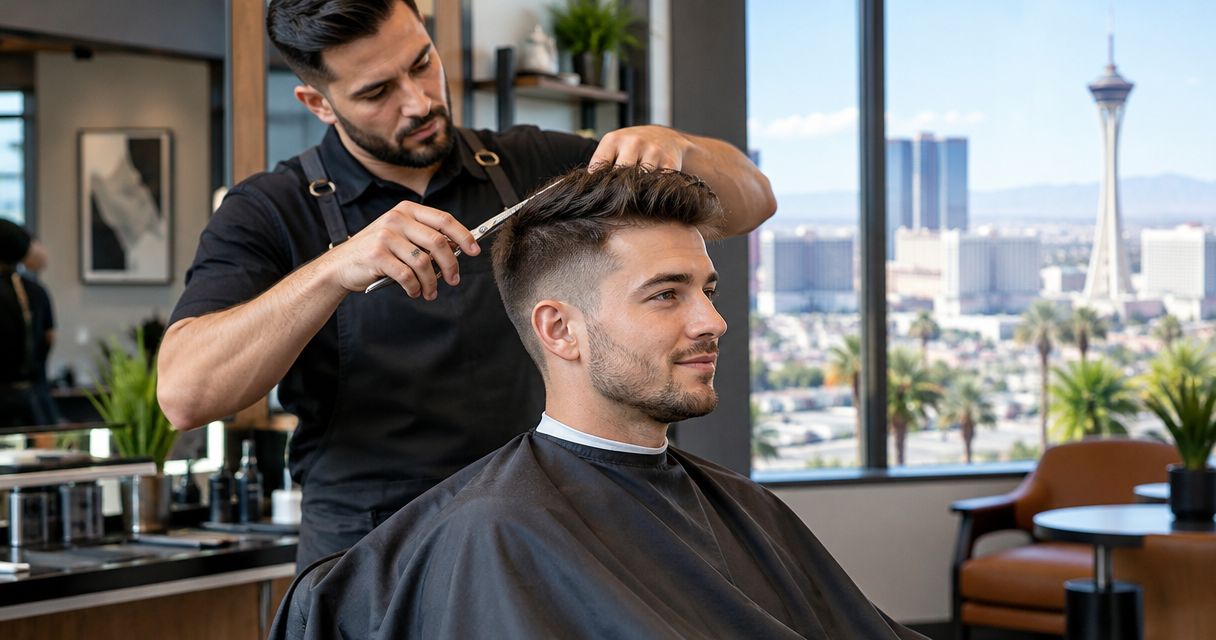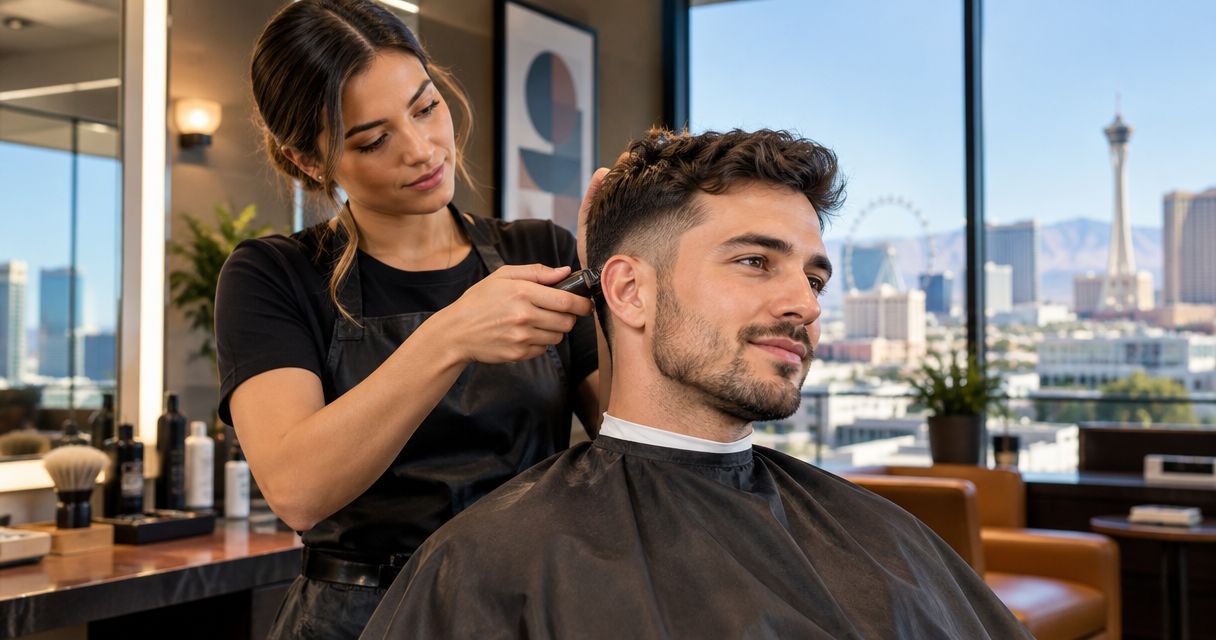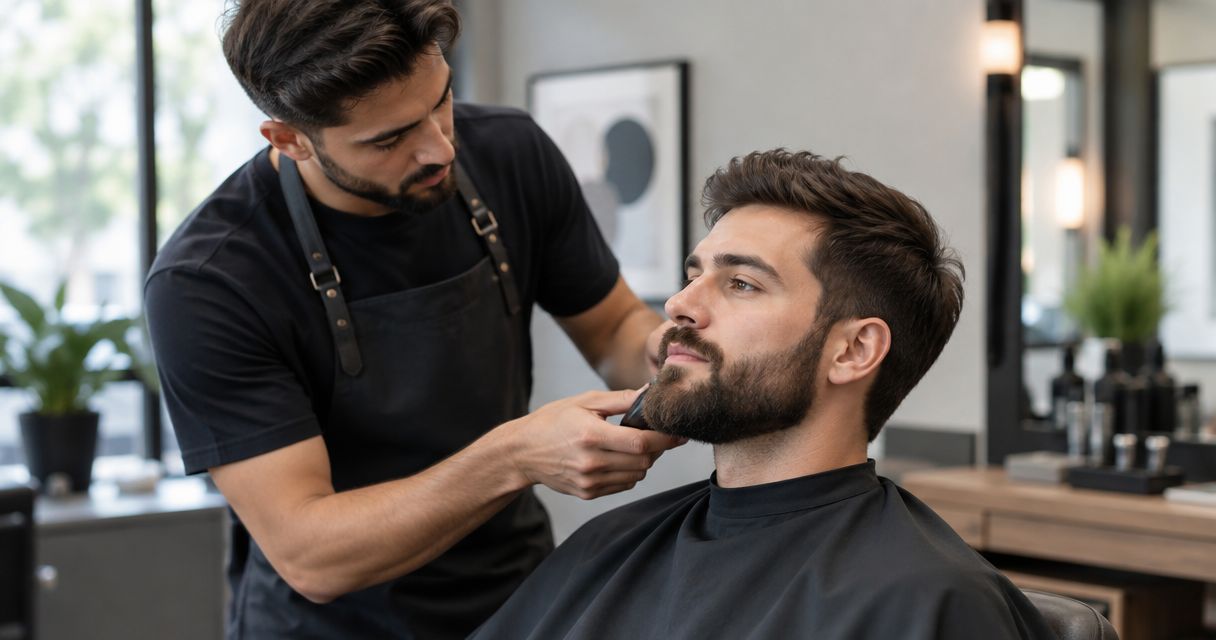
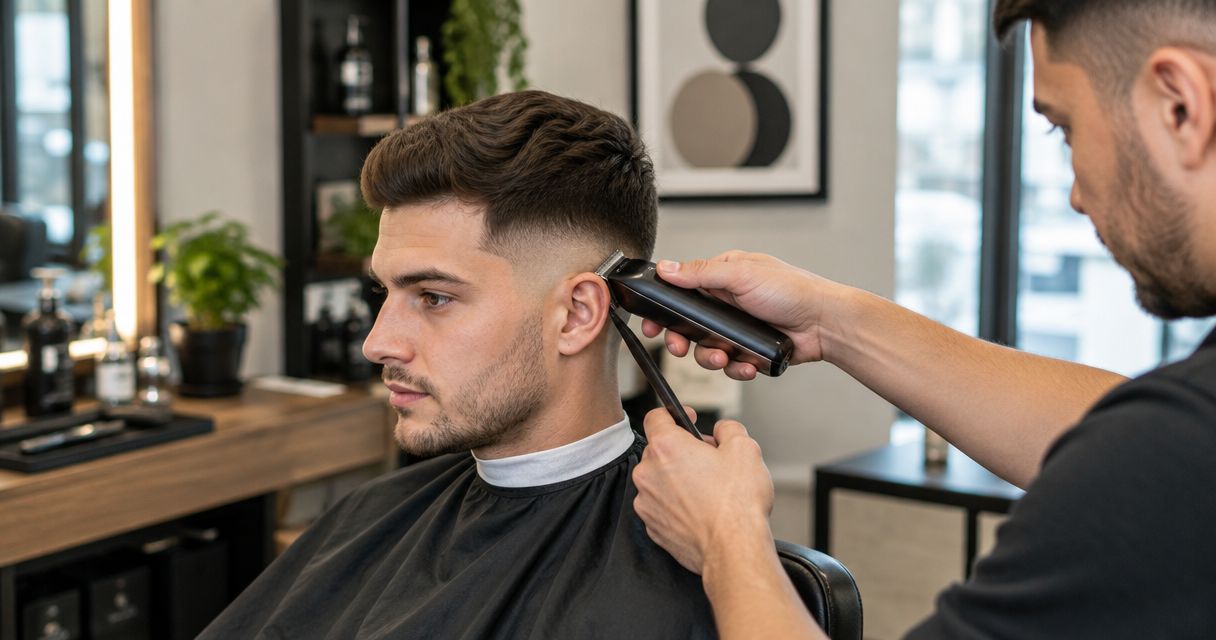
Tell your barber where you want the fade to sit, how short the shortest section should be, and how much length you want left on top. For your 2026 haircut, bring a reference photo and explain what you like about it; a low fade does not automatically mean a skin fade, and a photo does not tell your barber how you style your hair at home.
- Give your fade barber the height, shortest length, top length, and neckline instructions before cutting starts.
- Low, mid, and high describe fade placement; skin describes the shortest finish.
- Ballinfades offers fades and men's grooming for Las Vegas locals and visitors.
- Show a reference photo, then explain which details you want copied and which you do not.
How do you explain the fade you want to your barber?
Describe the finished shape, not just the haircut name. Start with fade height, confirm the shortest length, and explain the top before the clippers come out. If you're choosing a fade barber in Las Vegas, use the same clear instructions whether you're a local maintaining your usual cut or a visitor trying something different.
Start with the fade height
Say whether you want a low, mid, or high fade. These terms describe where the transition sits on the sides and back, not a fixed measurement that every barber follows identically.
For a low fade, explain that you want the shortest area kept closer to the ears and neckline. For a high fade, explain that you're comfortable taking the short section farther up the sides. If you're unsure, point to the highest place you want the short section to reach.
Show the boundary you want to preserve. Saying you want to keep weight around the upper sides gives your barber more direction than saying you don't want it too high.
Confirm the shortest length
Tell your barber whether you want visible skin or some hair left at the shortest point. This is separate from fade height: a low fade can finish at skin, while a higher fade can leave visible hair.
If you don't know guard numbers, say that plainly. Ask your barber to explain the shortest proposed length before cutting; you do not need clipper vocabulary to communicate that you want scalp coverage.
Explain what should happen on top
Tell your barber whether you want to keep the top, shorten it, or change its shape. Describe where you wear it: forward, swept aside, pushed back, or left in its natural texture.
Don't stop at a vague request to tidy it up. Point out anything you rely on, such as enough length to brush the front back or keep curls visible. A clean fade can still feel wrong if the top no longer works with your routine.
Describe the connection between top and sides
Ask for a blended connection if you want the sides to flow into the top without an obvious shelf. If your reference has a deliberately separate top, point that out rather than assuming the barber will copy it automatically.
Use everyday language. Saying you want the upper sides less bulky, but not shaved high, explains a practical goal without requiring you to name a technique.
Cover the hairline, neckline, and beard
A line-up shapes the edges around the hairline and temples. Tell your barber whether you want those edges defined and whether preserving your natural hairline is a priority.
Also explain how the sideburns should meet your beard, if you have one. Don't leave the neckline out of the conversation: the back view is part of the haircut even when your reference photo only shows the front.
Explain your daily routine
Tell your barber whether you use styling product, blow-dry your hair, or usually leave it alone. A reference styled upward is not a useful target if you want your hair to fall forward without styling.
Mention the parts that bother you between cuts, too. Hair that sticks out around the crown, upper sides that feel bulky, or a fringe that gets in your eyes gives your barber a specific problem to address.
Confirm the plan before cutting
Repeat the essentials in one sentence: fade height, shortest length, top, and edges. Ask your barber to confirm where the transition will sit before starting.
Resolve uncertainty while the length is still there. If you're deciding between keeping more coverage and cutting shorter, explain that you want to assess the longer version first rather than assuming length can be restored afterward.
Why this matters
A fade request contains several separate decisions. Asking for a clean fade describes the result you want, but it doesn't explain how much scalp should show, where the transition should sit, or what should happen above it.
Ballinfades is for Las Vegas locals and visitors seeking a fade barber and men's grooming services. For either group, a clear consultation starts with the same thing: explaining the details you want kept, not just the hair you want removed.
Low, mid, high, or skin: what should you ask for?
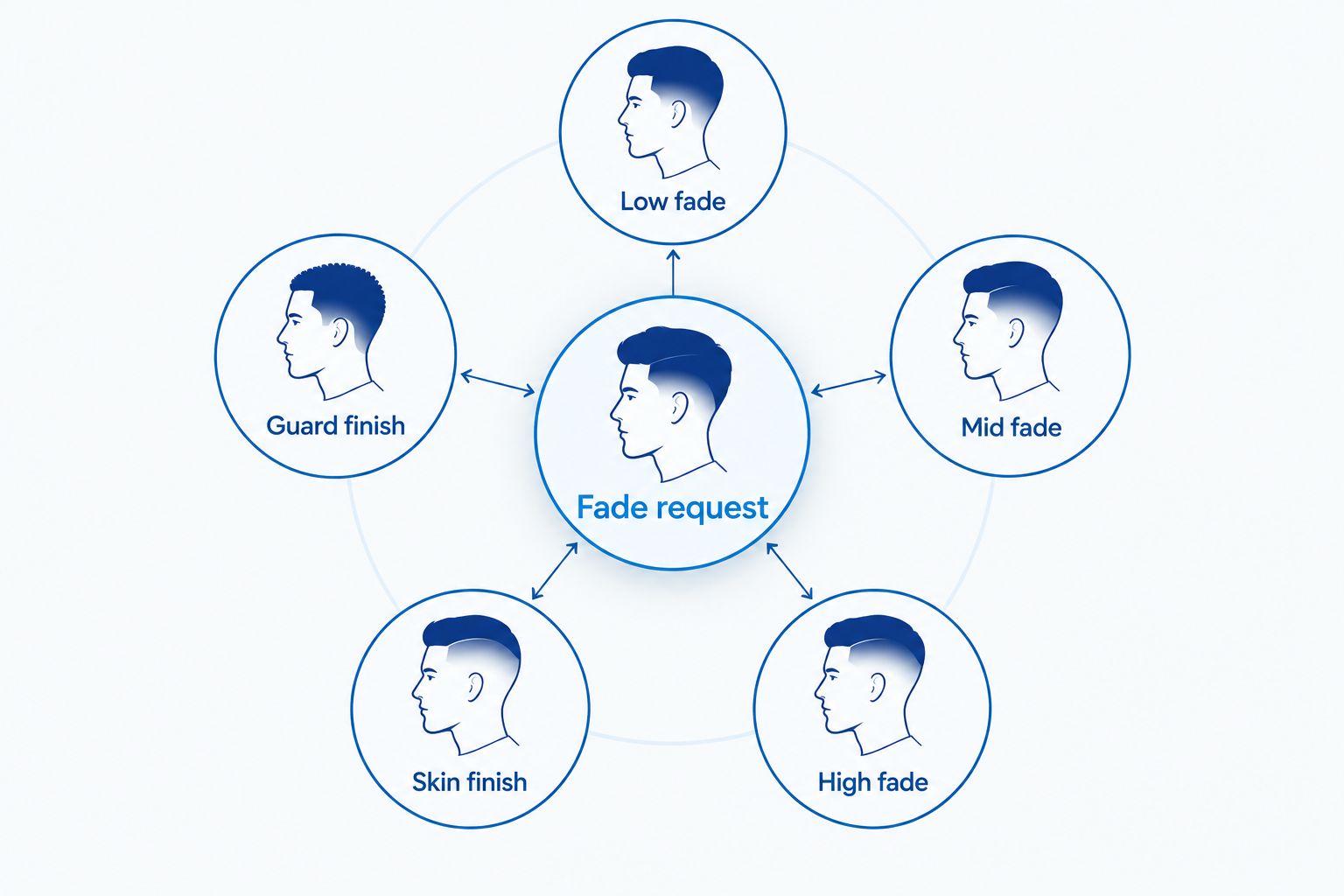
Low, mid, and high describe placement. Skin describes the shortest finish. These terms work together, so choose the height and shortest length separately rather than treating them as competing haircut names.
| Choice | What it describes | Best for | Trade-off to discuss |
|---|---|---|---|
| Low fade | A transition kept lower around the sides and back | Keeping more coverage higher on the sides | More upper-side hair remains to shape |
| Mid fade | A transition between low and high placement | A middle-ground starting point for the consultation | The exact placement still needs confirmation |
| High fade | A transition taken farther up the sides | Showing more of the short sides | Less upper-side coverage remains |
| Skin finish | A shortest section cut down to skin | A bare-skin finish beneath the blend | Exposes skin rather than leaving hair coverage |
| Guard finish | A shortest section that retains hair | Keeping visible hair at the base | Does not create the same bare-skin finish |
The right choice depends on the shape you want, not which label sounds sharpest. Ask your barber to point out the proposed fade height on your own head, then confirm whether the base will show skin.
What do clipper guard numbers mean?
Common full-size clipper guide-comb lengths include a #1 at 1/8 inch, a #2 at 1/4 inch, and a #3 at 3/8 inch. These are length references, not complete haircut instructions; the fade still needs a placement and a transition.
Confirm the intended result rather than relying on the number alone. Hair texture, density, and cutting direction affect how much coverage a short cut appears to leave, so the same nominal length does not look identical on everyone.
Your 2026 fade request, in plain English
Use this sample request as a starting point, then change the details to match your hair:
I'd like a low fade with some hair left at the shortest point, not skin. Keep enough length on top to brush it back, blend the upper sides, and keep the line-up close to my natural hairline. Please show me where you plan to take the fade before you start.
If you want a different finish, replace only the relevant instruction. For example, ask for a skin finish without changing your preferred fade height, or ask to preserve the top while shortening the sides.
Don't repeat instructions you don't understand just because they appear in a haircut video. A plain description you can explain beats a technical phrase you can't. Your barber needs your preferences, not a memorized script.
Why the same fade request looks different
The haircut name alone doesn't determine the finished shape. Give your barber context about these factors before agreeing on the cut:
- Hair texture: Explain whether you want to keep curls, waves, or a straighter finish visible on top.
- Hair density: Point out areas where retaining coverage matters to you.
- Growth direction: Show the spots that stick out or resist your usual styling.
- Top length: Explain which styling movements still need to work after the cut.
- Hairline and beard: Confirm which edges should be defined and how the sideburns should connect.
- Styling routine: Describe what you're actually willing to do each morning.
These details give the consultation a purpose. Instead of asking whether a particular fade suits everyone, ask how its height and coverage would work with the hair you have.
What should I show a fade barber in 2026?
Show a reference with a visible side view and explain the detail you want copied. A front-only photo leaves the fade height, back shape, and neckline unclear.
Choose a reference with similar texture and density when possible. Then separate the haircut from the styling: point out whether you like the short sides, the top shape, or simply how the hair has been brushed into place.
What if I like different details from different photos?
Assign each photo a clear job. Use one to show fade placement and another to show the top, rather than asking your barber to combine everything without explanation.
Also identify what you don't want copied. If you like the blend but dislike the sharp fringe or exposed scalp, say so before the reference becomes the assumed plan.
How do I keep my fade from going too high?
Ask your barber to show the intended upper boundary before cutting. Explain where you want to retain coverage, especially around the upper sides and temples.
Avoid using low fade as your only safeguard. Pointing to the area you want preserved makes the request more specific, and asking for a check before taking it higher keeps the decision clear.
What should I ask about before a Las Vegas haircut?
Tell the shop whether you're asking about a haircut alone or also want beard grooming, a shave, or hair design. Ballinfades offers those grooming services, so name what you want to discuss rather than assuming it's included in a fade request.
For a 2026 visit, call to discuss your haircut and grooming needs. Confirm practical arrangements directly instead of relying on an old screenshot or another person's appointment details.
Discuss your next fade
Talk through your haircut, fade height, and grooming needs before your visit.
FAQ
What should I say when I sit down with a fade barber?
Tell your fade barber the height, shortest length, and top length you want. Then confirm the hairline, neckline, and beard connection before cutting starts.
Is a low fade the same as a skin fade?
A low fade is not the same as a skin fade. Low describes placement, while skin describes the shortest finish; you can request both together.
Can I ask for a fade without knowing guard numbers?
You can ask for a fade without knowing guard numbers. Explain whether you want visible skin or hair coverage, and ask the barber to confirm the proposed shortest length.
Should I bring a haircut photo to Ballinfades?
Bring a haircut photo to Ballinfades if it helps explain your fade request. Point out the exact placement, top shape, and edges you want rather than asking for an unexplained copy.
How do I ask for a clean line-up without changing my natural hairline?
Ask for defined edges while preserving your natural hairline. Have your barber explain the planned outline before shaping the front and temples.
How do I save my haircut instructions for 2026?
Save your fade height, shortest length, top instructions, and clear photos after a haircut you like in 2026. Include side and back views so your next consultation has more than a front-facing reference.
Should I mention that I don't style my hair every morning?
Tell your barber if you don't style your hair every morning. The top should be discussed around your normal routine, not only how it looks immediately after styling in the chair.
One last thing
After a haircut you like, record what stayed long as carefully as what went short. Fade height alone won't capture the top shape, temple coverage, or beard connection that made the result work.
Keep those notes with your reference photos for your next 2026 visit. Your most useful haircut reference is a cut you liked on your own head, explained clearly.