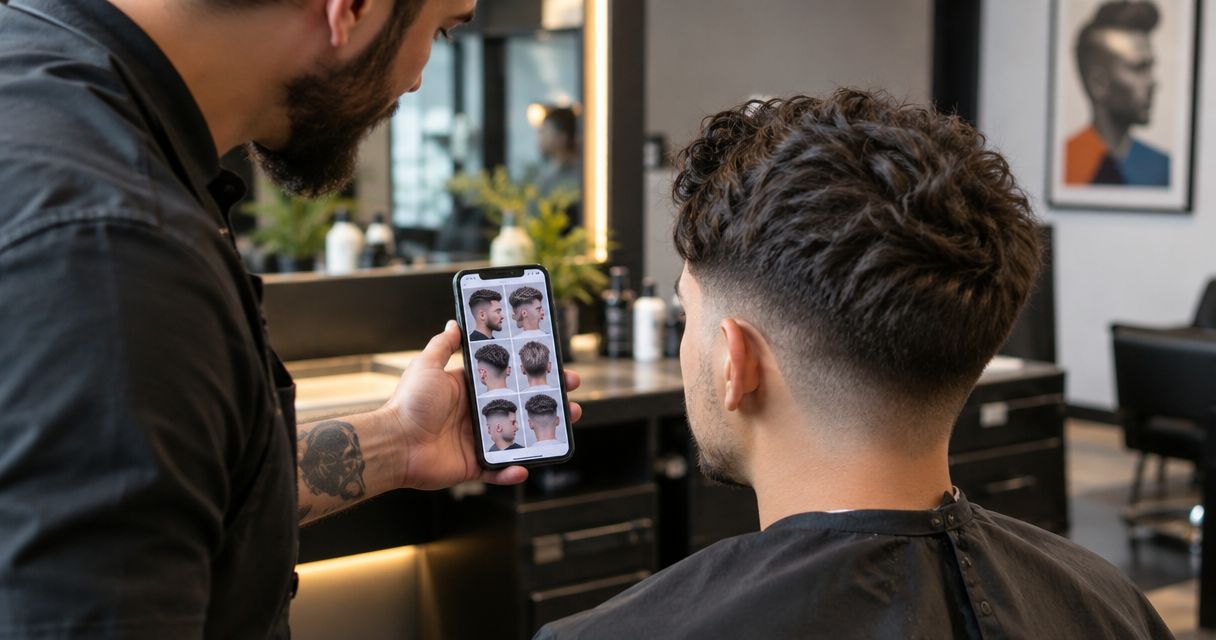
Read haircut photos by checking the blend, hairline, shape, and consistency across different views—not just whether the finished style looks good. When comparing Las Vegas barbers, use photos of hair similar to yours, then confirm who performed the cut; a gallery alone cannot show how well a barber listens or how your haircut will grow out.
- For a best barber las vegas search, compare similar hair textures and multiple views before choosing.
- A clear fade should show a gradual transition; dramatic lighting alone does not prove a clean blend.
- Check line-ups against the natural hairline, not just how straight the finished edge looks.
- Ballinfades offers Las Vegas men's haircuts, fades, shaves, beard trims, and hair design services.
Why this matters
A haircut photo shows a result on someone else's head. Your hairline, density, curl pattern, and preferred styling routine determine whether that result makes sense for you.
Use your 2026 search to find evidence of the haircut you want, rather than chasing whichever image looks most dramatic. If you need help naming the cut before comparing galleries, start with how to explain the fade you want to your barber.
The strongest reference photo helps you explain a decision, not promise an identical result. That distinction keeps a useful conversation from turning into a request your hair cannot support.
How do you read haircut photos when comparing Las Vegas barbers?
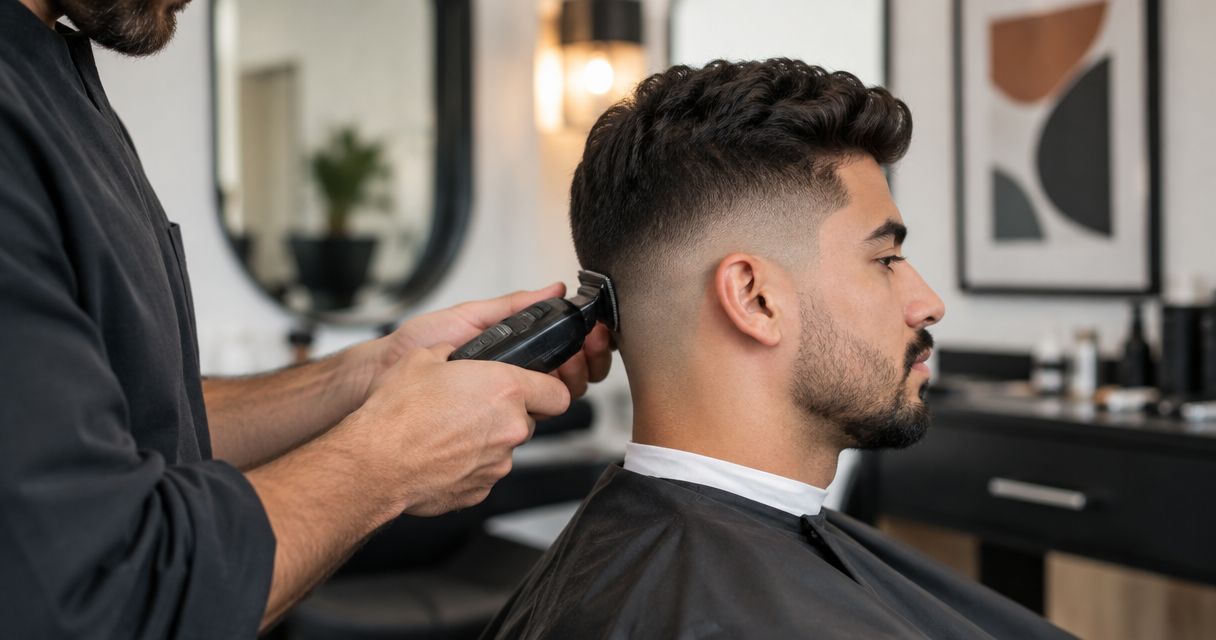
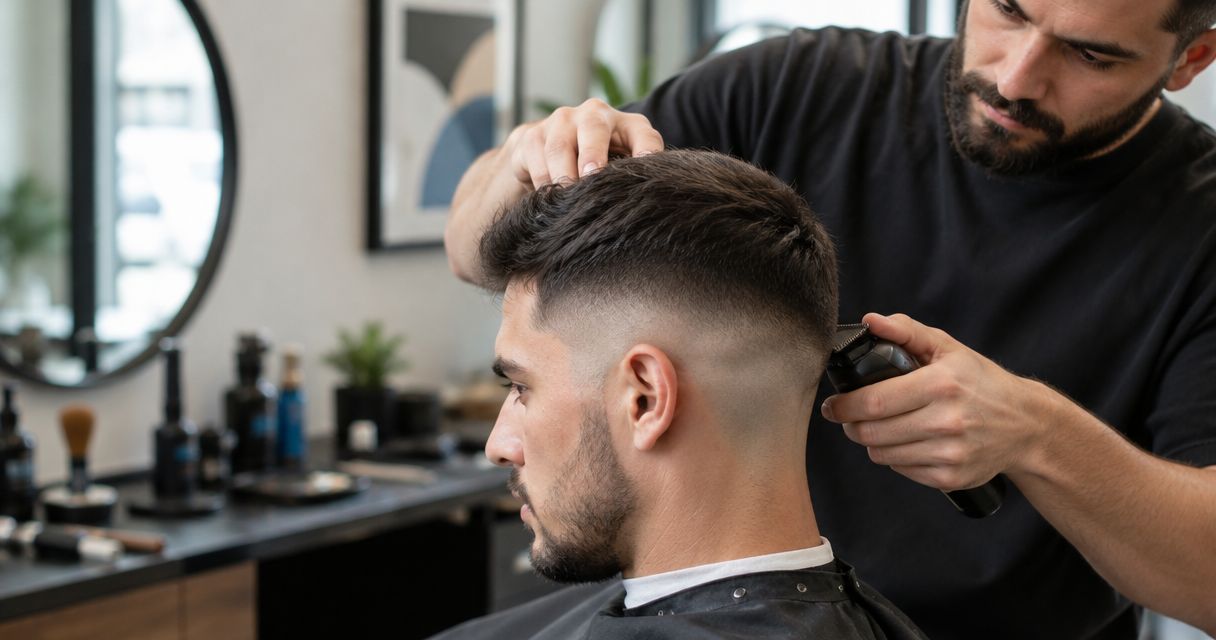
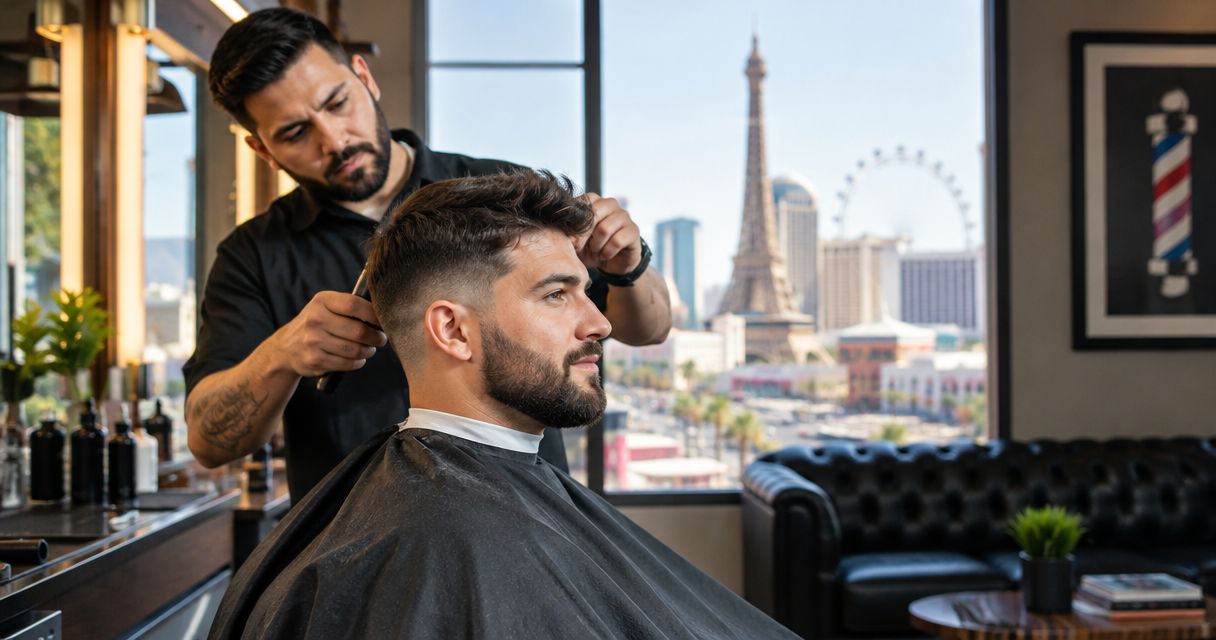
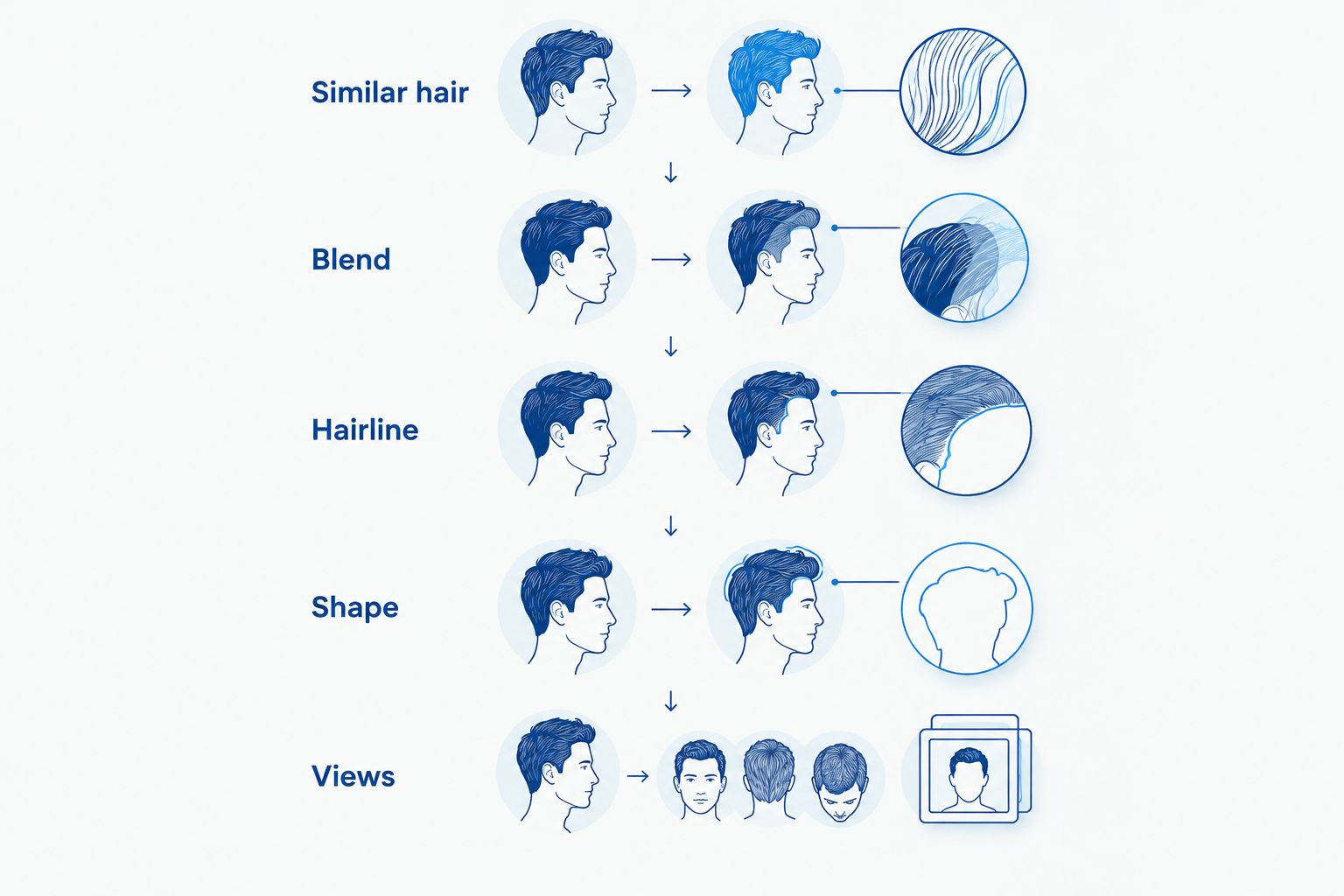
Start with a repeatable check. Look for 3 views—front, side, and back—of the same haircut, then inspect the details below before judging the overall finish.
Start with similar hair
Choose examples with a curl pattern, density, and hairline reasonably close to yours. A close-cropped cut on dense, straight hair does not explain how the same outline will sit on loose curls or a thinning crown.
Look at the starting conditions as well as the finished shape. If the gallery shows only the finished haircut, ask how the barber would adapt it to your hair rather than treating the photo as a fixed blueprint.
Inspect the blend
Follow the sides from the shortest area toward the longer hair above. A fade should show a gradual transition; look for abrupt bands, isolated dark patches, or an unintended shelf where the lengths meet.
Do not mistake every change in shade for a mistake. Head shape, hair direction, and lighting affect what you see, so check another angle before deciding that a dark area is an uneven blend.
Check the hairline
Look at the corners, temples, and forehead together. A clean line-up defines the edge, but a straight edge alone does not tell you whether the barber preserved the person's natural hairline.
Pay attention to how far the corners appear to have moved back. If keeping your natural outline matters, say that directly rather than assuming that every sharply outlined photo represents your preferred finish.
Read the shape
Step back from the close-up and look at the whole head. Check how the top connects with the sides, whether the crown sits naturally, and whether the outline matches the intended style.
A technically tidy fade can still leave more height or width than you want. Judge the haircut's silhouette separately from the quality of its edges.
Compare the views
Use each angle for a different job. A front-facing portrait cannot fully show the neckline, while a rear photo cannot explain how the fringe frames the face.
| Photo view | Best for checking | Useful evidence | What it cannot establish alone |
|---|---|---|---|
| Front view | Hairline and overall balance | Corners, fringe length, width through the sides | The full blend around the back |
| Side view | Fade placement and profile | Transition into the top, temple detail, retained weight | Whether both sides match |
| Back view | Neckline and rear blend | Crown connection, outline, changes in length | How the haircut frames the face |
| Detail view | A specific edge or transition | Close inspection of the area you care about | Whether the whole haircut works together |
The goal is not to find a flawless photograph. It is to see enough of the same haircut to understand what the barber actually produced.
Match the photo to the haircut you actually want
A low fade, mid fade, and high fade describe where the transition sits, not whether the haircut is good. None is automatically the right choice for your head or your routine.
Compare those choices through the amount of hair you want to keep on the sides. Then use a reference photo to show the transition's placement rather than relying on the name alone.
| Fade choice | Best for communicating | What to inspect | Trade-off to discuss |
|---|---|---|---|
| Low fade | A transition kept lower on the head | How the blend follows the area around the ears and neckline | More visible weight remains above the transition |
| Mid fade | A transition between low and high placement | Where the shortest area meets the fuller sides | The word “mid” still needs a visual reference |
| High fade | A transition placed higher on the sides | How the short sides connect with the top | Less side coverage leaves more of the head's outline visible |
Separate fade height from shortness
A photo can show a low transition that goes down to skin or a higher transition that retains visible hair. Those are separate decisions.
Tell the barber where you want the fade to sit and how short you want the shortest section. Otherwise, you can agree on the word “fade” while picturing different haircuts.
Check the top before saving the photo
Look for the length, direction, and finish of the hair above the fade. A brushed-back top and a forward fringe ask different things of your daily styling routine.
Ask what happens when the hair is not styled like the photograph. That question is especially useful if you want a haircut you can wear without recreating a carefully arranged finish every morning.
Why haircut photos look different
Photo quality affects how confidently you can judge a haircut. These factors explain why a sharp image and a sharp cut are not the same thing:
- Lighting: Strong highlights and deep shadows change how clearly you can see the transition between lengths.
- Camera angle: A tilted head or tight crop can leave the opposite side, crown, or neckline out of view.
- Styling: Brushing, drying, and product change the top's height, direction, and visible texture.
- Hair characteristics: Density, curl pattern, growth direction, and scalp contrast affect the finished appearance.
- Finishing work: A freshly defined edge shows the immediate result, not how that edge will look after growth.
- Photo age: An older image documents that haircut at that time; it does not confirm the barber's current assignment or services.
For a 2026 appointment, check whether the examples are dated and whether the person who made them is identified. A date helps establish recency, but it does not replace visible detail.
Do not label a photo edited simply because the result looks unusually crisp. If the image leaves important details unclear, request another view or discuss the haircut before committing.
What should you look for across a barber's gallery?
Look for repeated evidence of the details you care about. If preserving your corners is the priority, study hairlines across several cuts rather than giving extra weight to an impressive beard shape.
Save 2 reference photos: one for the overall haircut and another for the detail you want clarified. More unrelated examples can make your request harder to interpret.
Look beyond the standout haircut
A single strong photo shows one result. A set of comparable cuts lets you inspect whether the same approach appears across different clients and angles.
Check whether the gallery includes the type of service you need. Hair design examples do not answer every question about a restrained professional haircut, just as beard close-ups do not establish the quality of a crown blend.
Confirm the individual barber
A shop gallery can include work from different people. Ask who performed the haircut you saved and who would handle your appointment.
Use that question when comparing 2026 portfolios, especially if a post does not identify its creator. Do not assume every barber in a shop produced every example on its page.
Notice what remains unanswered
Photos do not establish appointment length, communication style, or how a haircut feels as it grows. They also cannot tell you whether your preferred finish requires more styling than you want to do.
Turn those gaps into questions. A useful gallery should prepare you for a conversation, not replace it.
How do you turn a haircut photo into a clear request?
Show the image, then explain the feature you want to copy. “Keep this much weight above the ears” gives the barber a more specific decision than “make it exactly like this.”
Choose 1 priority before the conversation: preserving your hairline, keeping length on top, reducing side volume, or coordinating the beard. State that priority first so smaller details do not obscure it.
Explain what you want to keep
Point out the parts of your current haircut that work. You might want the same top length with cleaner sides, or the same general shape without taking the corners back.
A reference photo should not accidentally authorize changes you never intended. Say what must stay as clearly as you describe what should change.
Explain what you want to avoid
Name the unwanted result in plain language. Examples include too much scalp showing, a fringe that feels too short, or a neckline that looks more squared than you prefer.
You do not need technical vocabulary to communicate those preferences. Ask the barber to explain the proposed adjustment before cutting if a term is unclear.
Ask about everyday styling
Describe how you normally wear your hair and whether you use styling products. Ask which parts of the reference depend on styling rather than cutting alone.
For a 2026 wedding or business trip, discuss the look you need for the occasion without assuming a photo guarantees the same finish. The useful question is how to adapt that shape to your hair and plans.
Where does Ballinfades fit in your comparison?
Ballinfades fits men seeking a Las Vegas barbershop for haircuts, fades, shaves, beard trims, and hair design. Use the same photo checks here that you use with any shop: similar hair, visible detail, and a clear conversation about the result.
The service range is relevant if you want to discuss a haircut and beard together. The limit is equally clear: a list of services does not establish which individual barber or haircut approach matches your preferences.
If the services match your needs, visit Ballinfades and call to discuss your reference photos. Ask how the fade, line-up, and top length would be adapted to you rather than requesting an exact copy.
Discuss your next haircut
Use your reference photos to ask about fade placement, top length, and beard shape.
FAQ
How do I use photos to find the best barber in Las Vegas?
Compare photos of hair similar to yours, inspect multiple angles, and confirm who performed the cut. A best barber las vegas search gives you candidates; the photos help you decide which questions to ask.
How many haircut photos should I bring to a barber?
Bring 2 reference photos: one showing the overall haircut and another showing a detail you want to clarify. Explain what you like about each instead of asking the barber to combine every feature.
What angles should a barber's haircut photos show?
Look for 3 views: front, side, and back. Together, they help you inspect the hairline, fade placement, crown connection, and neckline.
Can I tell whether a fade is good from one photo?
One photo can show a particular detail, but it cannot establish how the entire fade looks. Check another angle before treating a dark patch or sharp edge as proof of quality.
Should I choose a barber based on a sharp line-up?
A sharp line-up is only one part of the haircut. Check whether the outline respects the natural hairline and whether the blend and overall shape also match your preferences.
Should I only look at haircut photos posted in 2026?
Use dated 2026 photos to check recency, but do not dismiss a useful older reference solely because of its age. Confirm who performed the work and discuss how the haircut would suit your hair now.
Can Ballinfades help with a haircut and beard trim?
Ballinfades offers men's haircuts and beard trims in Las Vegas. Call to discuss how your preferred haircut and beard shape should work together.
One last thing
Before saving a photo, cover the face and look only at the hair. This separates the haircut's outline from the model's expression, clothing, and the setting.
Then name the feature you still want: the lower transition, the retained curls, or the softer hairline. If you can explain the feature, you have a useful reference—not just an appealing picture.