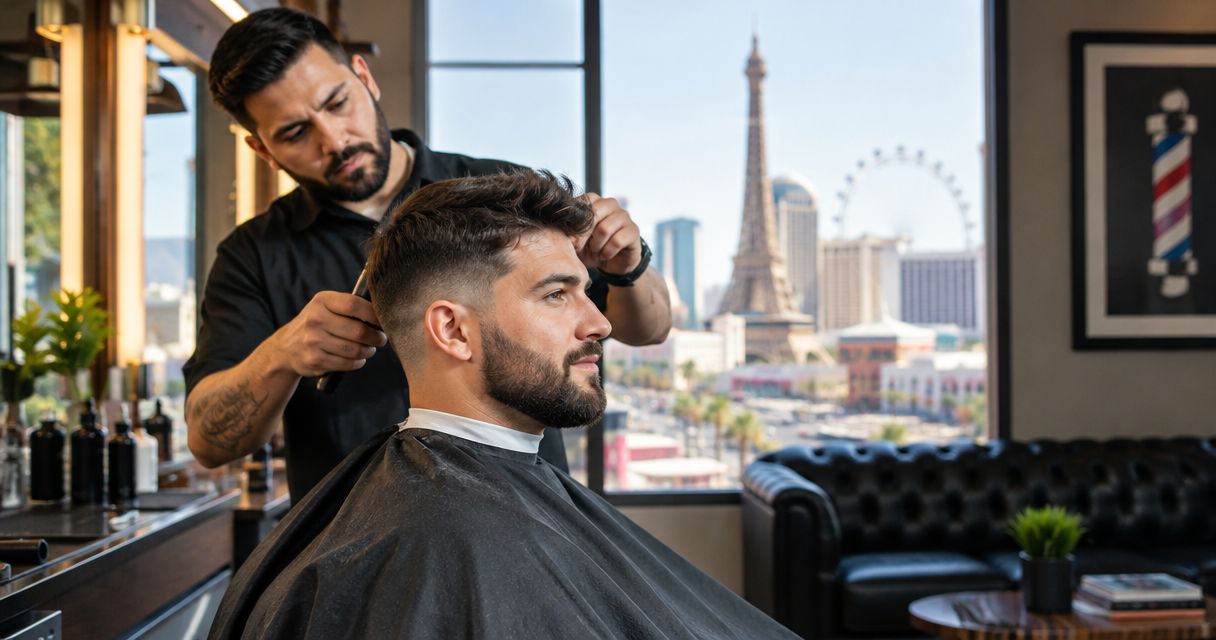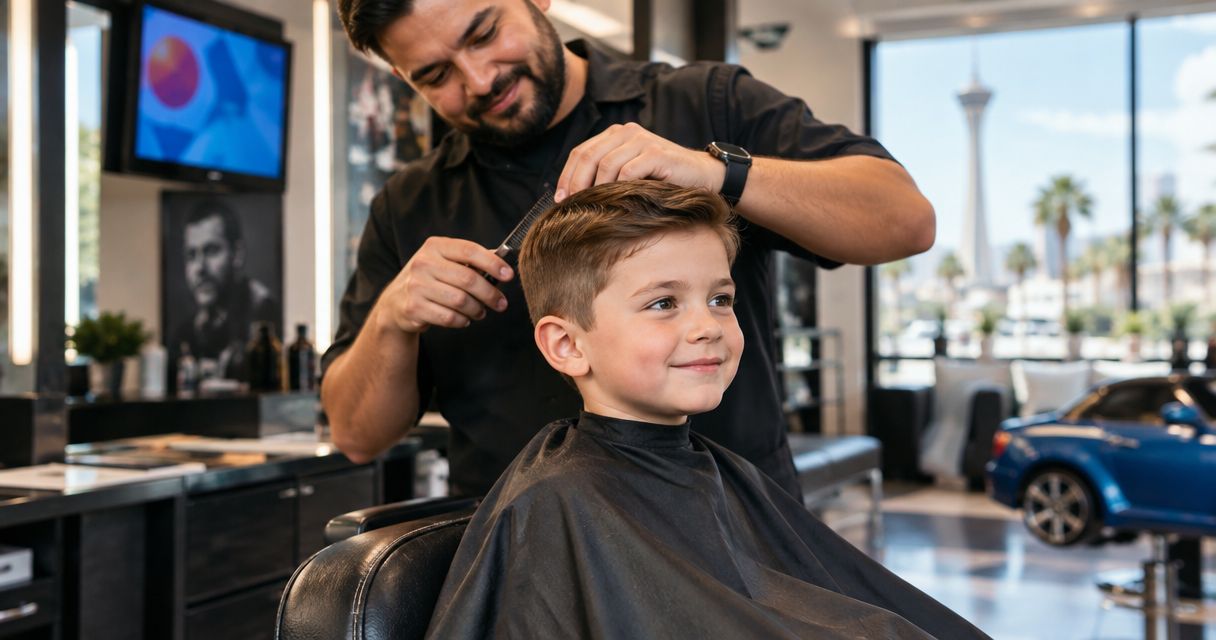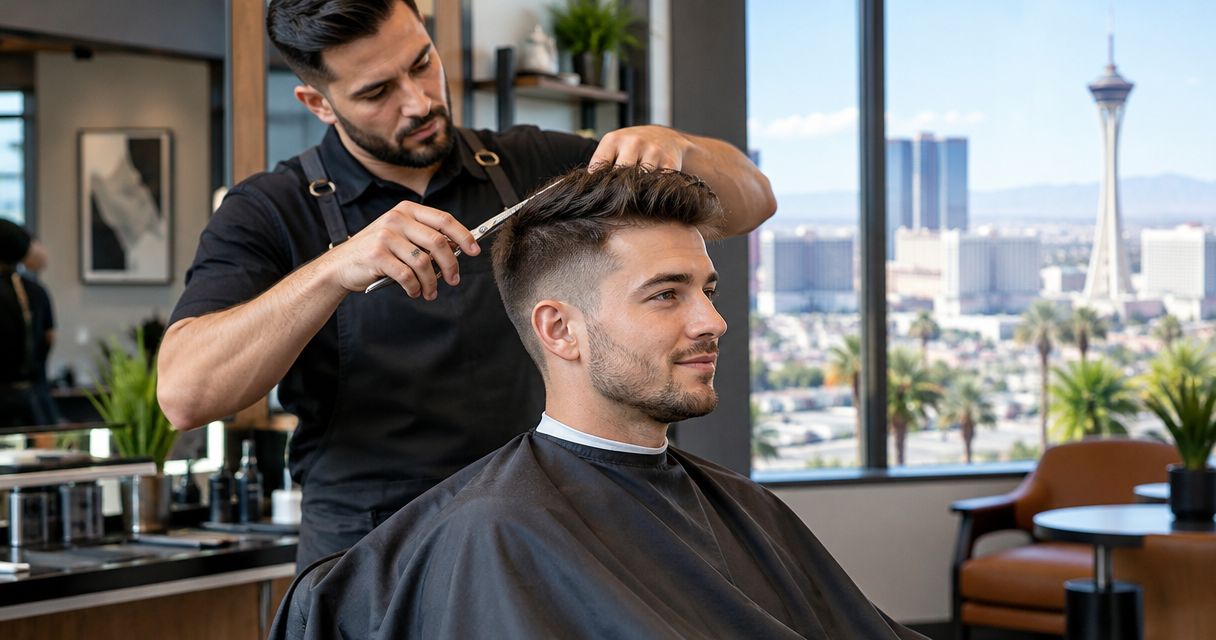
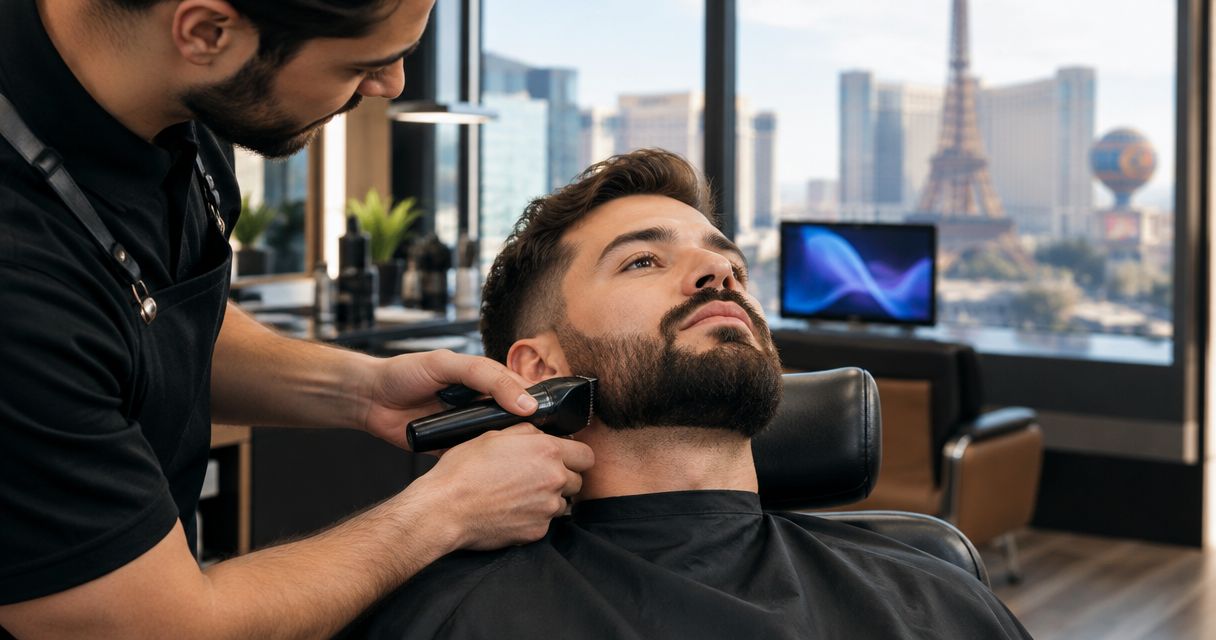
To keep your beard’s length while cleaning up its shape, ask for an outline cleanup, selective trimming of stray hairs, and no shortening through the chin unless you approve it. Before the trim starts, agree on the cheek line, neckline, and sideburn blend so a sharper finish does not become a shorter beard.
- For a beard trim Las Vegas appointment, specify the length you want preserved before discussing shape.
- Ballinfades offers beard trims and men's haircuts in Las Vegas for clients combining both services.
- An outline cleanup defines beard edges; bulk removal changes fullness and needs a separate discussion.
- Check the beard from the front and side before approving any shortening through the chin.
How do you keep beard length while cleaning up shape in Las Vegas?
Ask your barber to preserve the main body of the beard and treat the outline separately. A beard can look untidy because of its edges, uneven projection, or a disconnected sideburn—not simply because it is too long.
At Ballinfades, beard trims are among the grooming services offered alongside men’s haircuts, fades, and shaves. Explain whether you want beard maintenance alone or a haircut and beard trim together; that changes the conversation about where the two meet.
Use this sequence before any trimming begins:
- Show the length to keep. Point to the bottom of your beard and identify any areas you are growing out.
- Choose the outline. Discuss where the cheeks and neckline should sit without treating either as permission to shorten the chin.
- Discuss fullness. Identify projecting hairs or bulky sections, and distinguish those from density you want preserved.
- Confirm the connection. Decide whether the sideburn should stay full or transition into your haircut.
- Check the profile. Look at the front and side views before agreeing to further removal.
For your 2026 appointment, a current photo of your own beard is a useful starting point. A reference photo of someone else helps explain a shape, but it does not establish what your growth pattern will support.
Why this matters
A cleanup and a shorter beard are different requests. If you say only that you want to look tidier, you leave the amount of removal open to interpretation.
That matters whether you live in Las Vegas or are visiting for an event. You want to leave with the length you intended, not discover afterward that your barber understood “clean it up” as permission to reshape everything.
Ballinfades is a fit for men seeking beard trims and haircuts in Las Vegas. When keeping length is your priority, make that the main instruction rather than an extra comment after the service starts.
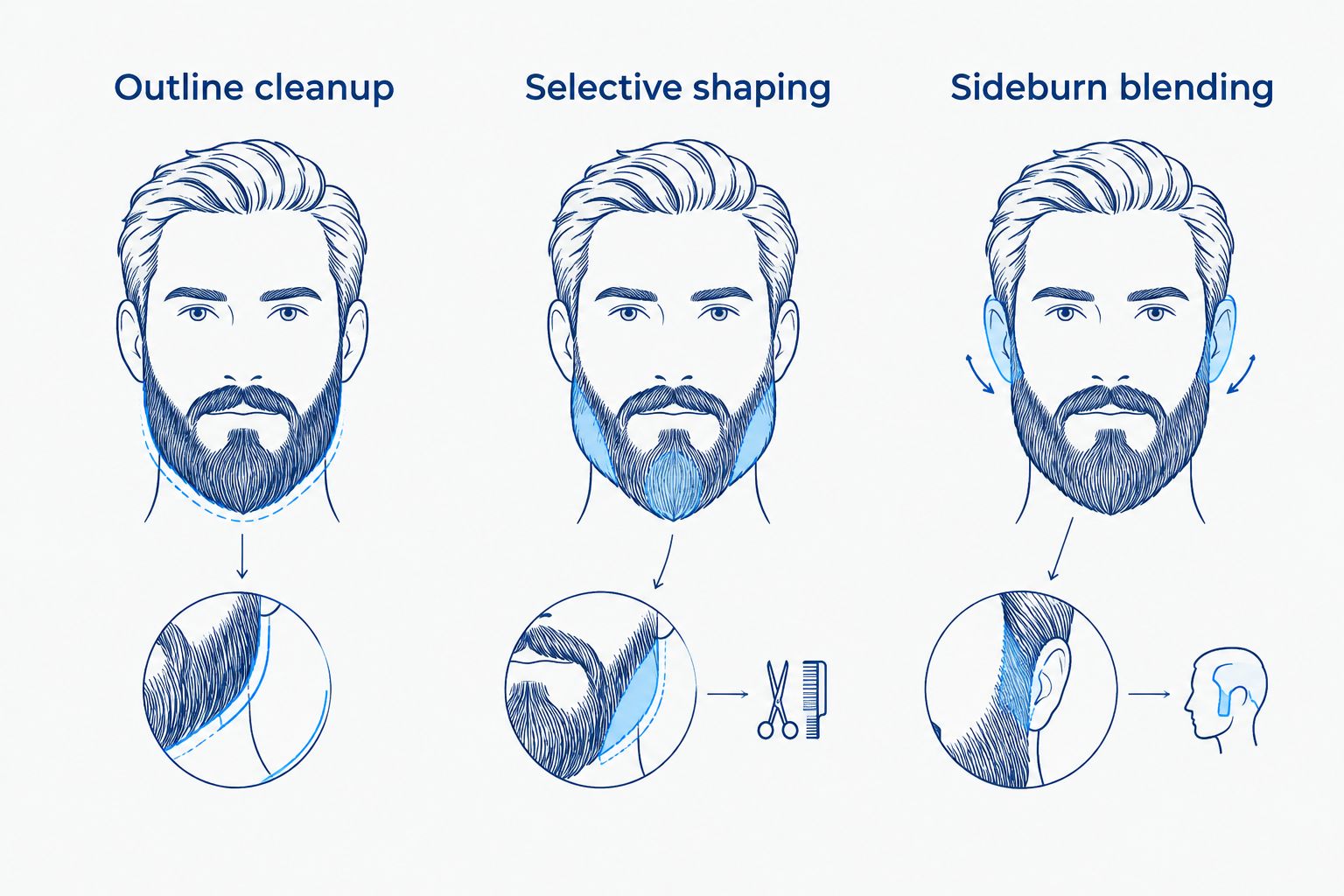
Outline cleanup: best for keeping the existing beard
An outline cleanup focuses on the boundaries of your beard: cheeks, neckline, and the edges around the mustache. It is the clearest starting request when you like the overall length but want a more deliberate shape.
The benefit is control. You can discuss the edges without automatically agreeing to remove fullness throughout the beard.
The limitation is equally important: cleaner edges do not correct every uneven section inside the beard. If the sides project noticeably or the chin has an uneven outline, you still need to discuss selective trimming.
Ask your barber to show you the proposed cheek line before lowering it. Removing hair from the upper cheeks changes the visible shape, even when the beard remains the same length at the bottom.
Around the mouth, explain whether you want hair cleared away from the lip or a fuller mustache preserved. Those are different preferences, not competing standards of neatness.
Selective shaping: best for uneven projection
Selective shaping targets hairs or sections that extend beyond your intended outline. The goal is to refine the silhouette without making the entire beard uniformly shorter.
Its advantage is precision: a projecting section can be addressed without treating every part of the beard the same way. Its trade-off is that shaping still removes hair, so you need agreement on which areas are expendable.
Do not describe all projecting hair as unwanted bulk. Some of it contributes to the fullness you are trying to grow.
For a 2026 beard refresh, identify the part you like before listing what bothers you. Keeping a strong chin shape, for example, gives your barber a clearer boundary than asking for a generally neater beard.
Sideburn blending: best for connecting beard and haircut
A sideburn blend changes the transition between your haircut and beard. It is useful when you want the connection to look intentional without shortening the beard’s lower section.
The benefit is a clearer relationship between the two styles. The drawback is reduced fullness wherever the blend removes hair, especially if you request a pronounced transition.
A beard blend does not require shortening the chin. Tell your barber where you want the blending to stop, and keep that instruction separate from your request for overall length.
If you are also getting a fade, discuss the haircut and beard together. A close haircut beside a full beard creates a different contrast from a softer transition.
Which cleanup approach matches your goal?
| Approach | Best for | Main benefit | Main trade-off |
|---|---|---|---|
| Outline cleanup | Keeping the existing beard | Defines edges without requiring an all-over reduction | Leaves internal bulk or uneven projection unaddressed |
| Selective shaping | Refining uneven projection | Targets specific sections rather than shortening everything | Removes some fullness where shaping occurs |
| Sideburn blending | Connecting beard and haircut | Adjusts the transition beside the face | Reduces density in the blended area |
These approaches can work together. Choose them by area rather than asking for the same treatment across your entire beard.
Why the right beard trim varies
The same outline does not suit every beard because the starting conditions differ. Your barber needs to see your actual growth and hear what you want to preserve.
- Growth pattern: The direction your hair grows affects how it lies and which sections project.
- Density: Lowering a cheek line or thinning a sparse section changes how much coverage remains visible.
- Texture: Curled or coiled hair can sit differently when stretched, brushed, or left in its usual state.
- Current shape: A beard with a longer chin needs different instructions from one kept evenly rounded.
- Haircut connection: A full sideburn and a blended sideburn create different transitions into the beard.
- Daily styling: A shape assessed only after unusually heavy styling does not show how you normally wear it.
For your 2026 grooming routine, choose a shape you can recognize and maintain in your usual presentation. Describe whether you normally brush your beard down, wear it fuller, or leave its natural texture largely alone.
What should you say before the clippers start?
Start with the boundary: you want the beard tidied, not shortened overall. Then explain what that means on your face.
Use specific instructions rather than relying on “just a little.” Pointing to the chin, cheeks, and sideburns makes your request easier to understand.
A useful consultation covers:
- Length: Identify the bottom edge you want to keep.
- Cheeks: Say whether you want only stray hairs removed or a newly defined line.
- Neckline: Ask to see the proposed boundary before hair is removed.
- Mustache: Explain whether clearing the lip matters more than keeping fullness.
- Sides: Identify unwanted projection without giving blanket permission to thin everything.
- Sideburns: Decide whether the connection should remain full or blend into the haircut.
At Ballinfades, ask about the beard trim and any haircut you want to pair with it when you call. Explain your length goal during that conversation, then confirm the details in person before trimming begins.
Discuss your beard trim
Ask about beard grooming and explain the length you want to keep.
Can you clean up a beard without losing length?
You can preserve the beard’s main length while cleaning its edges and trimming selected stray hairs. That does not mean no hair comes off; it means the bottom length and overall fullness are not automatically reduced.
If an uneven section needs more removal than you expected, ask to see the proposed change first. You can choose a lighter cleanup rather than pursuing a perfectly uniform shape immediately.
Should you trim your beard while growing it out?
A beard cleanup can preserve your growth goal when it focuses on edges and selected uneven areas. Shortening every section to match the shortest patch works against keeping the length you have already grown.
Tell your barber which areas you are waiting to fill in. Do not treat every uneven patch as a reason to reduce the whole beard.
Should your beard match your fade?
Your beard and fade should look intentional together, but they do not need matching lengths. You can keep a full beard beneath a close haircut or request a softer transition through the sideburn.
Choose the connection based on the look you want to maintain. Ask where the blend will start and stop before agreeing to it.
How should you check the finished shape?
Look at your beard in its usual position, not only while your chin is lifted for the neckline. Check the front, both sides, and the way the mustache meets the rest of the beard.
Focus on the boundaries you agreed to preserve. Is the chin still the length you wanted? Do the cheeks retain the coverage you discussed? Does the sideburn connection match the haircut?
For a 2026 reference photo, capture the finished beard from the front and side after it is arranged the way you normally wear it. Bring that image to a later appointment if you want the same outline again.
Do not request extra trimming simply because a beard looks slightly different from each side. Growth patterns are not perfectly mirrored, and chasing identical outlines can mean removing more hair than your original goal allowed.
FAQ
What should I ask for when booking a beard trim in Las Vegas?
Ask for a beard trim that preserves your current length, then explain whether you want edge cleanup, selective shaping, or a sideburn blend. Confirm the cheek line, neckline, and chin length before trimming begins.
Can a barber shape my beard without making it shorter?
A barber can preserve the main beard length while cleaning the outline and trimming selected projecting hairs. Any shaping removes some hair, so identify the areas you do not want shortened.
Is a beard line-up the same as a full beard trim?
A beard line-up focuses on defining the edges, while a full beard trim can also change length and fullness. Confirm what the service includes rather than assuming the name communicates your exact goal.
Should I brush my beard before my appointment?
Present your beard in the way you normally wear it so your barber can assess its everyday shape. Explain any brushing or styling that substantially changes how the hair sits.
How do I choose a beard shape in 2026?
Choose a beard shape in 2026 by considering your existing growth, preferred fullness, haircut, and daily styling. Use reference photos to explain the outline, not as a promise that a different growth pattern will look identical.
Does Ballinfades offer beard trims and haircuts?
Ballinfades offers beard trims and men's haircuts in Las Vegas, along with fades and shaves. Call to discuss the grooming services you want and explain that keeping beard length is your priority.
What should I save after a beard trim in 2026?
Save front and side photos after a beard trim in 2026 if you want a clear reference for your next appointment. Note which areas were blended and which lengths you wanted preserved.
One last thing
A clean line is not automatically a lower line. Removing more cheek or neckline hair changes the outline; it does not necessarily bring you closer to the beard you wanted.
Before the final touch-up, ask whether the next pass will sharpen an existing edge or move it. That distinction helps you protect both length and coverage while still leaving with a deliberate shape.